





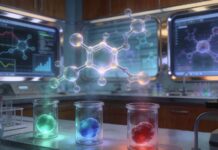
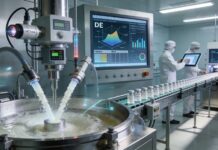

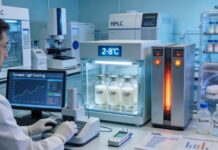
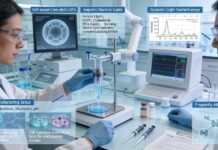
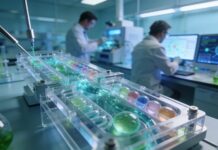

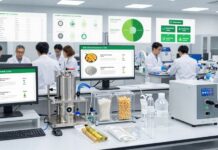
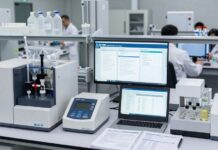






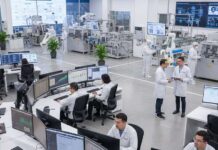
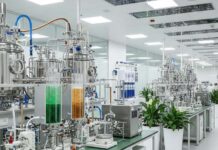

The biopharmaceutical industry is undergoing a digital revolution, moving away from manual, paper-based operations toward highly automated and data-driven manufacturing environments. At the center of this transformation is the need for equipment that can seamlessly bridge the gap between the physical and digital worlds. The automation readiness of single-use fluid handling platforms is now a critical factor in the design and selection of bioprocess systems. By integrating advanced sensors, smart actuators, and plug-and-play connectivity directly into disposable assemblies, manufacturers can achieve a level of process control and reproducibility that was previously only possible in permanent stainless steel facilities. This evolution is not just about replacing manual valves with automatic ones; it is about creating an intelligent, responsive manufacturing ecosystem that can optimize itself in real-time.
The Foundation of Digital Integration in Disposable Systems
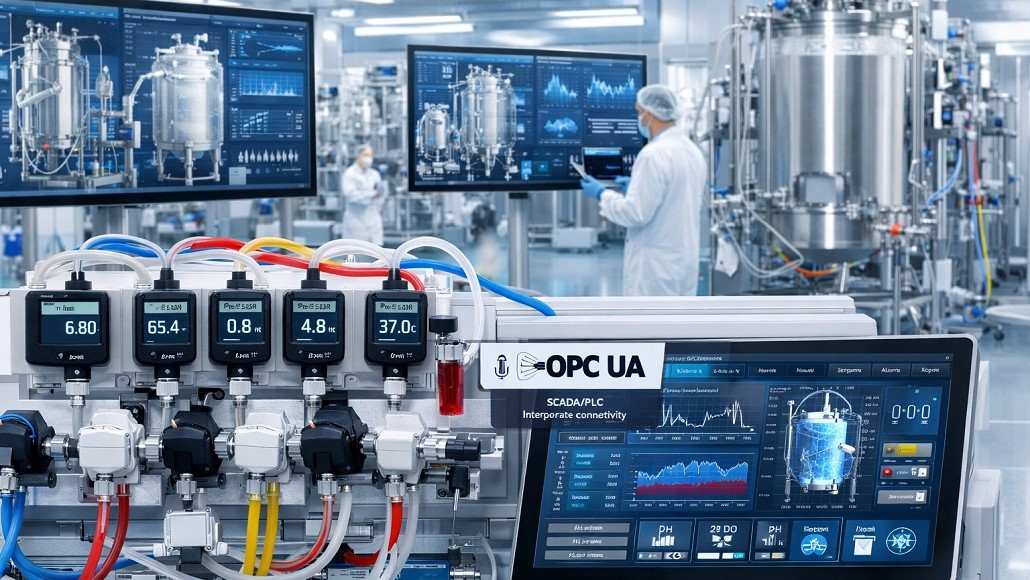
In the early days of single-use technology, the focus was primarily on material safety and sterility. However, as the scale and complexity of bioprocessing increased, the limitations of manual fluid management became clear. The automation readiness of single-use fluid handling platforms began with the integration of pre-sterilized, single-use sensors for critical parameters like pressure, temperature, and flow. Unlike traditional sensors that require cleaning and re-calibration, these single-use versions are delivered pre-calibrated and integrated into the manifold. This “digital readiness” allows the system to be immediately connected to a centralized control platform, ensuring that every fluid transfer is monitored and recorded with precision.
Advancements in Sensor Technology and Data Fidelity
The quality of an automated system is only as good as the data it receives. Recent innovations in the automation readiness of single-use fluid handling platforms have seen the emergence of more sophisticated sensors capable of measuring pH, dissolved oxygen, and even biomass in real-time. These sensors utilize optical or electrochemical principles that are compatible with the gamma sterilization process used for disposable assemblies. The high fidelity of the data produced by these sensors allows for more granular control over the bioprocess, enabling automated “closed-loop” adjustments. For example, a pH sensor can trigger the automated addition of a base solution, maintaining the optimal environment for cell growth without the need for manual sampling or intervention.
Smart Actuators and the Precision of Fluid Movement
Automation is not just about sensing; it is also about acting. The automation readiness of single-use fluid handling platforms has led to the development of specialized pinch valves and pump heads that are designed to work seamlessly with plastic tubing. These smart actuators can be controlled remotely by a PLC or a SCADA system, allowing for complex sequences of fluid transfers to be executed with perfect timing and repeatability. In a modern “smart” manifold, the opening and closing of valves is no longer a manual task but a pre-programmed step in an automated recipe. This reduces the risk of operator error, such as opening the wrong valve and causing a costly batch failure or a breach in sterility.
Enhancing Reproducibility and Meeting Regulatory Demands
One of the primary drivers for increased automation is the requirement for consistent quality across different production runs. The automation readiness of single-use fluid handling platforms ensures that every batch is manufactured according to the exact same parameters, every single time. This level of reproducibility is essential for meeting the stringent quality standards of GMP manufacturing. Furthermore, automated systems provide a comprehensive electronic batch record (EBR) that captures every data point and every operator action. This digital transparency simplifies the auditing process and provides regulators with clear evidence that the process remained within its validated state throughout the entire production cycle.
Reducing Human Error in Complex Unit Operations
Human intervention is often the greatest source of variability and risk in a bioprocess. The automation readiness of single-use fluid handling platforms addresses this by minimizing the number of manual steps required to set up and run a process. For instance, in a complex downstream purification step, an automated platform can manage the entire sequence of buffer exchanges and product elutions based on a pre-defined program. This not only improves safety but also allows highly skilled operators to focus on higher-level tasks, such as process optimization and data analysis, rather than the mechanical tasks of opening valves and monitoring levels. The result is a more efficient use of labor and a more robust manufacturing environment.
The Role of Connectivity and Interoperability Standards
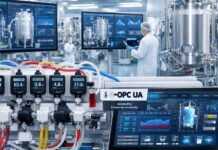
For automation to be effective, different pieces of equipment must be able to communicate with each other. A major challenge in the automation readiness of single-use fluid handling platforms has been the lack of standardized communication protocols. However, the industry is now moving toward open standards like OPC UA (Open Platform Communications Unified Architecture), which allow for easier integration of single-use systems with various control platforms. This interoperability ensures that a manufacturer can build a hybrid facility using equipment from multiple vendors while still maintaining a unified digital control environment. This flexibility is essential for creating a modern, agile manufacturing suite that can be easily reconfigured for different products.
Scaling Automation from Pilot to Commercial Manufacturing
The transition from a small-scale pilot plant to a full-scale commercial facility is a critical phase in drug development. The automation readiness of single-use fluid handling platforms facilitates this scale-up by providing a consistent control logic that can be applied across different volumes. A process that is automated at the 50-liter scale can be much more easily transferred to a 2,000-liter system if the underlying automation platform is the same. This “seamless scale-up” reduces the need for extensive re-programming and re-validation, significantly shortening the time to market for new biologics. By building automation into the process from the very beginning, companies can ensure that their commercial operations are as efficient and reliable as their clinical ones.
Cost-Benefit Analysis of Automated vs. Manual Systems
While the initial investment in the automation readiness of single-use fluid handling platforms may be higher, the long-term benefits often far outweigh the costs. Automated systems lead to lower labor costs, fewer batch failures, and more efficient use of raw materials. Furthermore, the ability to collect and analyze large volumes of process data allows for continuous process improvement, which can significantly increase yields over time. A thorough cost-benefit analysis should consider the value of improved quality, reduced regulatory risk, and the increased agility of the manufacturing facility. In many cases, the ROI for automation in a single-use environment is achieved in a matter of months, making it a compelling choice for both large and small biopharma companies.
Future Outlook: AI, Digital Twins, and Autonomous Bioprocessing
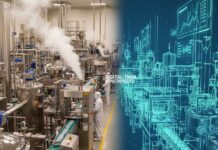
As we look to the future, the integration of artificial intelligence (AI) will take the automation readiness of single-use fluid handling platforms to the next level. We are moving toward a world where “digital twins” virtual replicas of the physical manufacturing process can be used to simulate and optimize a run before it even begins. AI algorithms will be able to analyze real-time data from the single-use sensors to predict and prevent process deviations before they occur. Eventually, we may see fully autonomous bioprocessing systems that can manage the entire production cycle with minimal human oversight. This will be the ultimate realization of the “factory of the future,” and automation-ready single-use technology will be the foundation upon which it is built.
Conclusion
The convergence of disposable technology and digital automation is a defining trend in the evolution of biomanufacturing. The automation readiness of single-use fluid handling platforms provides the precision, transparency, and scalability needed to meet the challenges of producing complex biologics and advanced therapies. By embracing these intelligent platforms, manufacturers can improve their operational excellence, ensure the highest levels of quality, and accelerate the delivery of life-saving medicines to patients. As the industry continues to innovate, the integration of “smart” technology into every aspect of the fluid path will remain a key priority, driving the future of bioprocessing toward a more efficient, data-driven, and reliable era.
