



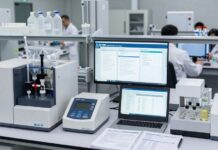
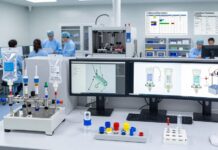






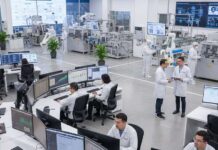
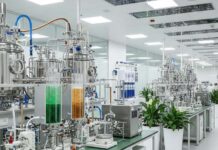


NVIDIA and Eli Lilly and Company have announced the creation of a new NVIDIA-Lilly AI lab, designed to apply artificial intelligence to some of the most complex challenges in drug discovery and development.
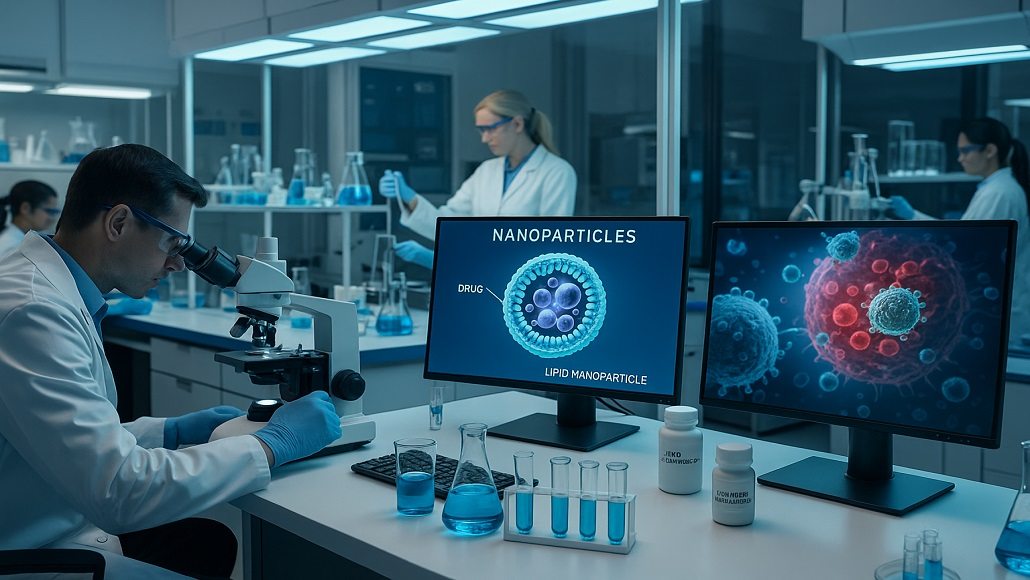
The companies plan to invest up to $1 billion over five years in talent, infrastructure and computing resources to support the lab, which will be based in the San Francisco Bay Area. The facility will bring together Lilly experts in biology, chemistry and medicine with NVIDIA engineers and AI model builders, working side by side to generate large-scale data and develop advanced AI models using the NVIDIA BioNeMo platform.
“AI is transforming every industry, and its most profound impact will be in life sciences,” said Jensen Huang, founder and CEO of NVIDIA. “NVIDIA and Lilly are bringing together the best of our industries to invent a new blueprint for drug discovery — one where scientists can explore vast biological and chemical spaces in silico before a single molecule is made.”
“For nearly 150 years, we’ve been working to bring life-changing medicines to patients,” said David A. Ricks, chair and CEO of Lilly. “Combining our volume of data and scientific knowledge with NVIDIA’s computational power and model-building expertise could reinvent drug discovery as we know it. By bringing together world-class talent in a startup environment, we’re creating the conditions for breakthroughs that neither company could achieve alone.”
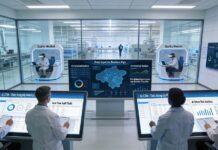
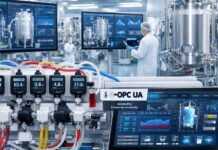
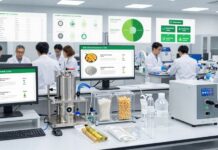
Initial work at the NVIDIA and Lilly AI lab will focus on building a continuous learning system that links Lilly’s laboratory experiments with computational models, allowing AI-assisted experimentation to run around the clock. The approach is intended to help experiments, data generation and model development inform each other in real time.
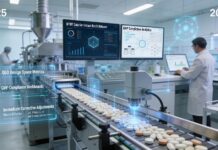
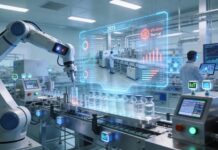
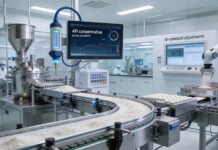
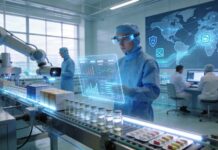
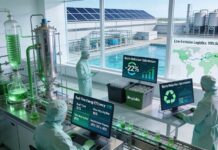
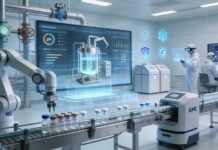
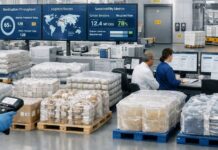
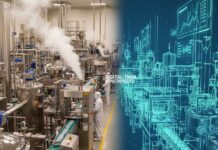
The initiative builds on Lilly’s previously announced AI supercomputer and will leverage next-generation NVIDIA architectures, including Vera Rubin. The companies also plan to explore applying AI across clinical development, manufacturing and commercial operations, including the use of robotics, digital twins and multimodal models to improve efficiency and supply chain reliability.
Work at the new lab is expected to begin in South San Francisco early this year.
