


















Key Takeaways
- Artificial intelligence enables real-time optimization of pharmaceutical process parameters, reducing waste and improving yield
- Machine learning algorithms detect anomalies in manufacturing data that humans might miss, enabling faster corrective action
- Predictive performance modeling allows manufacturers to simulate process outcomes before running expensive physical experiments
- AI systems learn from historical batch data to continuously improve manufacturing protocols and product consistency
- Implementation in regulated environments requires careful validation and documentation to maintain FDA compliance
- Integration challenges include data quality requirements, algorithm transparency for regulatory purposes, and organizational readiness
- Early adopters of AI process optimization achieve competitive advantages through improved efficiency and faster product development
The pharmaceutical manufacturing sector faces relentless pressure to improve efficiency while maintaining the absolute quality standards that protect patient safety. Within this challenging environment, artificial intelligence has emerged as a transformative technology capable of addressing longstanding process optimization challenges that have limited pharmaceutical manufacturing capabilities for decades. Artificial intelligence pharma manufacturing represents not merely an incremental enhancement but a fundamental shift in how manufacturers approach process control, quality assurance, and continuous improvement.
The Convergence of AI and Pharmaceutical Manufacturing
Traditional pharmaceutical process optimization relies heavily on human expertise, statistical analysis of historical data, and carefully designed experiments. Chemists and engineers develop process understanding through years of accumulated knowledge, running experiments that identify optimal parameters through trial and error. While this approach has generated safe, effective medicines for decades, it operates within significant limitations. The parameter space for pharmaceutical processes is extraordinarily complex interactions between multiple variables create nonlinear relationships that resist traditional analytical approaches. Running sufficient experiments to map this space completely becomes economically infeasible, leading manufacturers to settle for suboptimal processes that work adequately rather than achieving true optimization.
Machine learning systems fundamentally change this equation. These systems can identify patterns within complex datasets that exceed human analytical capacity. Where traditional analysis might examine correlations between two or three variables, machine learning algorithms routinely analyze hundreds of variables simultaneously, discovering subtle relationships that generate substantial optimization opportunities. Machine learning drug production systems operate continuously, analyzing incoming batch data and generating process improvements faster than any manual analysis approach.
The implementation begins with data collection and preparation. Pharmaceutical facilities accumulate vast amounts of manufacturing data batch records, environmental monitoring data, equipment performance metrics, and analytical results. When properly formatted and integrated, this historical data provides the training foundation for machine learning models. These models learn from past batches, identifying which process parameters, material properties, and environmental conditions correlate with superior product quality or higher yields.
Process Parameter Optimization Through Machine Learning
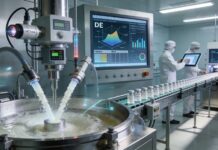
One of the most direct pharmaceutical applications of machine learning involves optimizing the numerous parameters controlling unit operations. Consider a pharmaceutical synthesis step where chemists control reaction temperature, pressure, reactant ratios, solvent type, reaction time, and catalyst amount. The theoretical parameter combinations are essentially infinite. Traditional development tests a few dozen combinations and settles on parameters that work acceptably. A production chemist might discover years later that a small parameter adjustment yields superior results, but this discovery comes through accident rather than systematic optimization.
AI process optimization pharma systems attack this challenge through systematic analysis of all available batch data. If a facility has manufactured the product two hundred times, the system analyzes all two hundred batches, correlating process parameters with outcomes. A parameter adjustment that produced superior results in one batch but was never explicitly explored might become obvious through this analysis. The system identifies which parameter combinations consistently generate superior yields, which conditions produce unwanted side reactions, and which factors have negligible impact despite seeming important.
The practical benefit extends beyond simply identifying historical optimization opportunities. Once trained on historical data, these systems can predict how untested parameter combinations will perform. A chemist might ask the system: “What yield would I achieve if I raised the reaction temperature by five degrees and reduced the catalyst amount by ten percent?” The system, having learned the underlying relationships from historical batches, can estimate the outcome without requiring an expensive experimental run. This predictive capability accelerates process development substantially, reducing the timeline from initial concept to robust, optimized process.
Yield improvement represents one of the most quantifiable benefits of this optimization. Pharmaceutical synthesis routes are inherently inefficient many reactions generate substantial quantities of byproducts or require multiple purification steps. A two to five percent yield improvement might seem marginal until one considers that improving synthetic yield by five percent across a facility producing thousands of kilograms of active pharmaceutical ingredients annually translates to hundreds of additional kilograms of product from the same quantity of starting materials. For expensive active ingredients, this yield improvement represents millions of dollars in recovered value annually.
Anomaly Detection and Quality Assurance
Beyond process optimization, machine learning excels at detecting patterns that deviate from normal operation. Pharmaceutical yield improvement often comes not from groundbreaking innovations but from preventing quality issues that manufacturers might not even recognize as problems. Human operators focus on obvious deviations temperature excursions, pressure spikes, or visible changes in product appearance. Machine learning systems detect subtler anomalies that presage quality issues but might never trigger obvious alarms.
Consider a tablet coating process where operators monitor spray gun air pressure, coating temperature, and tablet bed temperature. These visible parameters remain within specification. However, unobserved factors slight changes in coating solution viscosity due to atmospheric humidity, barely perceptible changes in spray gun nozzle wear, or gradual coating pan bearing degradation create subtle changes in the tablet surface properties. Over weeks or months, these cumulative changes produce tablets that visually appear identical to properly coated tablets but demonstrate inferior durability or stability.
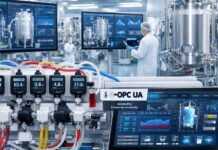
Machine learning anomaly detection systems analyze hundreds of process data points simultaneously, identifying patterns that precede quality issues. Rather than waiting for failed finished product testing, these systems flag subtle parameter changes that correlate with quality degradation. Operators receive alerts enabling corrective action before any out-of-specification product reaches the finished goods warehouse. This prevention focus is far superior to detection after production completion.
The quality assurance implications prove substantial. Traditionally, pharmaceutical quality assurance operates as a testing-based system measuring finished product properties to verify that batches meet specifications. This approach can only identify problems after they exist. Machine learning shifts the paradigm toward prediction forecasting which batches are likely to have quality issues based on process signatures during production. Manufacturers can take corrective action on live batches, potentially rescuing material that would otherwise require rejection.
Predictive Performance Modeling
Pharmaceutical process development requires extensive experimentation. New drug candidates must undergo stability testing, demonstrating that tablets maintain potency under temperature and humidity stress. Manufacturers must develop robustness assessments, showing that processes remain functional when parameters vary slightly from nominal values. This testing traditionally consumes months or years of calendar time because stability studies must run for defined periods, and robustness testing requires sequential experiments each requiring production time.
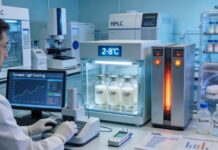
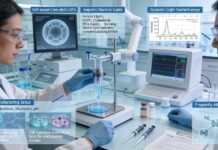
Predictive analytics drug production powered by machine learning offers a transformative alternative. Artificial neural networks and other machine learning approaches can build mathematical models that predict how products will perform under various conditions without requiring physical testing. A pharmaceutical chemist can define a degradation pathway the chemical mechanisms by which a drug molecule breaks down under thermal stress and allow machine learning models to predict stability profiles based on formulation composition and process conditions.
These predictive models never replace required regulatory testing, but they accelerate development timelines by allowing researchers to identify the most promising formulation candidates before committing to expensive stability testing. Rather than testing ten candidate formulations through complete stability protocols, researchers might use predictive modeling to identify the three most promising candidates, then test only those through formal regulatory studies. This efficiency reduction in development cycles translates to faster product introductions and competitive advantage.
The modeling capability extends beyond stability. Machine learning systems can predict how manufacturing scale-up will impact product properties. A chemistry development team developing a drug at laboratory scale might struggle with predicting how batch size increases will influence impurity profiles or yield. Advanced predictive models trained on historical scale-up data can forecast scale-up challenges and suggest parameter adjustments that maintain product consistency across different batch sizes. This capability accelerates the technology transfer from development laboratories to manufacturing sites.
Implementation Challenges in Regulated Manufacturing
Despite extraordinary potential, implementing AI pharmaceutical process optimization in regulated manufacturing environments presents unique challenges. Unlike consumer-facing AI applications where occasional errors generate minimal consequences, pharmaceutical manufacturing AI systems directly impact product safety and efficacy. FDA and international regulatory agencies demand rigorous validation demonstrating that AI systems function correctly across the full range of expected conditions.
The validation challenge begins with algorithm transparency. When machine learning systems identify optimal process parameters or detect anomalies, manufacturers must understand why the system reached those conclusions. Regulators cannot approve manufacturing processes based on “black box” algorithms that recommend parameter changes without explainable reasoning. Pharmaceutical companies must implement explainable AI approaches that provide clear rationales for all recommendations. This transparency requirement significantly constrains which machine learning architectures prove suitable for pharmaceutical applications, ruling out some advanced techniques that work brilliantly but operate as inscrutable black boxes.
Data quality requirements represent another critical challenge. Machine learning systems perform only as well as the data training them. If historical batch records contain transcription errors, if equipment sensors produced inconsistent measurements, or if process control systems operated with unreliable timestamps, the resulting machine learning models will reproduce these data quality issues in their predictions. Pharmaceutical manufacturers must clean and validate all historical data before using it to train production optimization systems. This data preparation effort often accounts for sixty to eighty percent of total implementation time, far exceeding the effort required to develop the actual machine learning models.
Integration with existing regulatory frameworks presents perhaps the most subtle challenge. Pharmaceutical manufacturers operate under established quality systems with defined procedures for managing processes and making process changes. When artificial intelligence recommends process parameter adjustments, who authorizes the change? Must every AI-generated recommendation go through formal change control procedures designed for human-initiated modifications? If time-sensitive anomalies emerge and waiting for formal approval would allow quality issues to propagate, can operators implement AI-recommended corrections immediately? These policy questions lack established answers, forcing manufacturers to develop novel quality system procedures that accommodate AI capabilities while maintaining regulatory compliance.
Real-World Implementation Success Factors
Pharmaceutical manufacturers successfully implementing AI process optimization typically follow similar implementation pathways despite varied organizational structures and product portfolios. Early success requires starting with well-defined optimization challenges where improvements are readily measurable. Rather than attempting comprehensive facility-wide AI implementation, successful organizations target specific unit operations where substantial optimization potential exists and outcomes are unambiguous.
Yield improvement in active pharmaceutical ingredient synthesis represents an ideal starting point. The outcome total yield measured as percentage of theoretical maximum is unambiguous and directly measurable. Historical data for synthesis processes often spans multiple years and thousands of batches, providing rich datasets for machine learning model training. The business case is clear even modest yield improvements generate substantial financial returns. These characteristics make synthesis optimization an attractive initial AI project.
Building organizational competency represents another critical success factor. Pharmaceutical organizations accustomed to traditional process development must develop new capabilities in data science, machine learning implementation, and regulatory compliance for AI systems. Rather than attempting to build all required expertise internally, most organizations engage specialized AI consulting firms or establish partnerships with technology companies possessing deep machine learning experience. These external partnerships accelerate implementation and provide access to advanced technical capabilities that would require years to develop in-house.
Regulatory strategy development demands equal emphasis to technical implementation. Before deploying AI systems in regulated manufacturing, pharmaceutical manufacturers should engage with regulatory agencies particularly the FDA to discuss intended AI applications and proposed validation approaches. This proactive engagement prevents discovering mid-implementation that regulators expect validation approaches that manufacturers did not anticipate. Regulatory precedents for AI use in pharmaceutical manufacturing are still developing, making early engagement with regulatory bodies particularly valuable.
The Competitive and Strategic Implications
Pharmaceutical companies deploying Machine learning quality control systems ahead of competitors gain substantial advantages. These early adopters achieve superior process efficiency, reducing manufacturing costs across their product portfolios. They identify process optimization opportunities that competitors haven’t recognized, potentially allowing them to achieve higher yields on identical products. They develop organizational capabilities in machine learning and AI implementation that become increasingly valuable as regulatory agencies continue encouraging innovation and advanced manufacturing technologies.
Looking forward, AI capabilities in pharmaceutical manufacturing will expand dramatically. Current implementations focus primarily on optimizing established processes where manufacturers possess years of historical data. Future systems will support drug development for entirely new chemical entities, where historical data doesn’t exist. Advanced AI will enable continuous manufacturing approaches offering superior consistency and efficiency compared to traditional batch processing. Artificial intelligence will manage complex manufacturing networks spanning multiple sites, optimizing global supply chains while maintaining quality and regulatory compliance across jurisdictions.
The competitive landscape is shifting toward organizations with advanced AI capabilities. Pharmaceutical manufacturers without artificial intelligence process optimization will find themselves at escalating disadvantages unable to match the efficiency of competitors using AI-driven optimization, slower to develop new products because AI doesn’t accelerate their development processes, and less able to respond to market challenges because their manufacturing platforms lack AI-enabled flexibility.
Conclusion
Artificial intelligence and machine learning have progressed from promising emerging technologies to essential capabilities for competitive pharmaceutical manufacturing. The ability to optimize complex pharmaceutical processes, detect quality anomalies in real-time, and predict manufacturing outcomes without physical experimentation represents a fundamental advancement in manufacturing capability. The companies leading this transformation deploying AI process optimization despite implementation challenges position themselves for long-term competitive advantage.
The path forward requires commitment to overcoming genuine implementation challenges. Data quality must be improved, regulatory compliance procedures must be developed, and organizational capabilities in machine learning must be built. These undertakings demand sustained investment and executive commitment. Yet the competitive pressure to implement AI capabilities will only increase as early adopters demonstrate substantial benefits. For pharmaceutical manufacturers committed to operational excellence and competitiveness, artificial intelligence pharma manufacturing has evolved from optional innovation to essential capability.
