



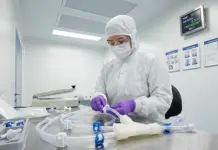








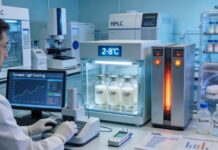




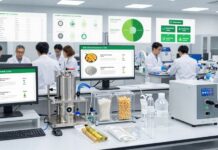
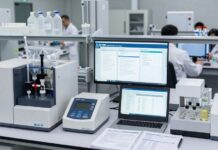









The global demand for biologics, including monoclonal antibodies, recombinant proteins, and advanced therapies, is reaching unprecedented levels. As pharmaceutical companies strive to bring these complex molecules to market, the ability to scale production efficiently and reliably has become a competitive necessity. One of the most significant enablers of this growth is the adoption of single-use fluid handling systems for biologics, which provides a flexible and scalable alternative to traditional stainless steel infrastructure. These systems allow manufacturers to bypass the lengthy construction and validation timelines associated with fixed equipment, offering a modular approach to capacity expansion that can adapt to the shifting needs of the clinical and commercial pipeline.
The Strategic Importance of Scalability in Bioprocessing
Scalability in bioprocessing refers to the ability to increase production volume while maintaining consistent product quality and process performance. For many years, this was achieved by building larger and larger stainless steel tanks, a process that was both expensive and inflexible. Today, scaling biologics with single-use fluid handling systems allows for a more nuanced strategy. Instead of “scaling up” into massive individual vessels, many manufacturers are now “scaling out” by using multiple parallel single-use lines. This approach not only reduces the risk associated with a single batch failure but also allows for a more agile response to market demand fluctuations, ensuring that life-saving treatments are available when and where they are needed most.
Reducing the Validation Burden in Regulated Environments
A major hurdle in scaling any biopharmaceutical process is the requirement for rigorous validation to ensure that the equipment does not negatively impact the safety or efficacy of the drug. Traditional systems require extensive testing for cleaning effectiveness and sterility, which must be repeated every time the scale is changed. By utilizing single-use fluid handling systems for biologics, much of this burden is shifted to the supplier. These disposable components are typically manufactured in ISO-certified cleanrooms and delivered pre-sterilized via gamma irradiation. The comprehensive validation packages provided by the manufacturers include data on material characterization, sterility assurance, and biocompatibility, which significantly streamlines the regulatory submission process and accelerates the move to commercial scale.
Managing Capital Expenditure and Risk during Expansion
The financial risk associated with building a new manufacturing facility is enormous, particularly when the success of the drug candidate is not yet guaranteed. Scaling biologics with single-use fluid handling systems helps mitigate this risk by lowering the initial capital expenditure (CapEx) required for facility construction. Because these systems do not require complex piping, massive boilers for steam generation, or large-scale water purification systems for cleaning, the cost of building a “disposable-ready” facility can be up to 40% lower than a traditional one. This allows companies to invest their capital more strategically, perhaps by funding additional clinical trials or diversifying their product portfolio, rather than tying up resources in rigid infrastructure.
Operational Flexibility and Multi-Product Facilities
In the modern biopharma landscape, the “one-product, one-facility” model is rapidly becoming obsolete. Contract Development and Manufacturing Organizations (CDMOs) and large pharmaceutical firms alike are moving toward multi-product facilities that can handle a variety of different modalities. The use of single-use fluid handling systems for biologics is the linchpin of this flexibility. Because the entire fluid path is discarded after each batch, there is zero risk of cross-contamination between different products. This allows for a rapid “changeover” between production runs, enabling a facility to produce a monoclonal antibody one week and a viral vector for a gene therapy the next. This level of versatility is essential for maximizing facility utilization and meeting the diverse needs of the global healthcare market.
Enhancing Sterility Assurance in Large-Scale Production
As production scales increase, the complexity of maintaining a sterile environment grows exponentially. Any breach in sterility can lead to the loss of a multi-million dollar batch and potentially cause drug shortages. Single-use fluid handling systems for biologics enhance sterility assurance by providing a closed-system environment that is inherently protected from the surrounding room air. Advanced aseptic connectors and tube welding technologies allow for the secure transfer of fluids between various unit operations without ever exposing the product. This “closed processing” approach is particularly important as the industry moves toward more decentralized manufacturing models, where production might take place in smaller, localized facilities that may not have the same level of environmental control as a massive centralized plant.
Material Selection and Chemical Compatibility at Scale
When scaling biologics with single-use fluid handling systems, the choice of materials becomes a critical consideration. The plastics used in these systems must be robust enough to handle the mechanical stresses of large-scale fluid movement while remaining inert to the biological product. Engineers must carefully evaluate the chemical compatibility of the tubing, bags, and connectors with the various buffers and media used in the process. Manufacturers of these systems now offer a wide range of film technologies designed specifically for bioprocessing, featuring high gas barrier properties, excellent tensile strength, and low extractable profiles. Ensuring that these materials perform consistently at both small and large scales is a key component of a successful scale-up strategy.
Overcoming Technical Challenges in Large-Volume Fluid Handling
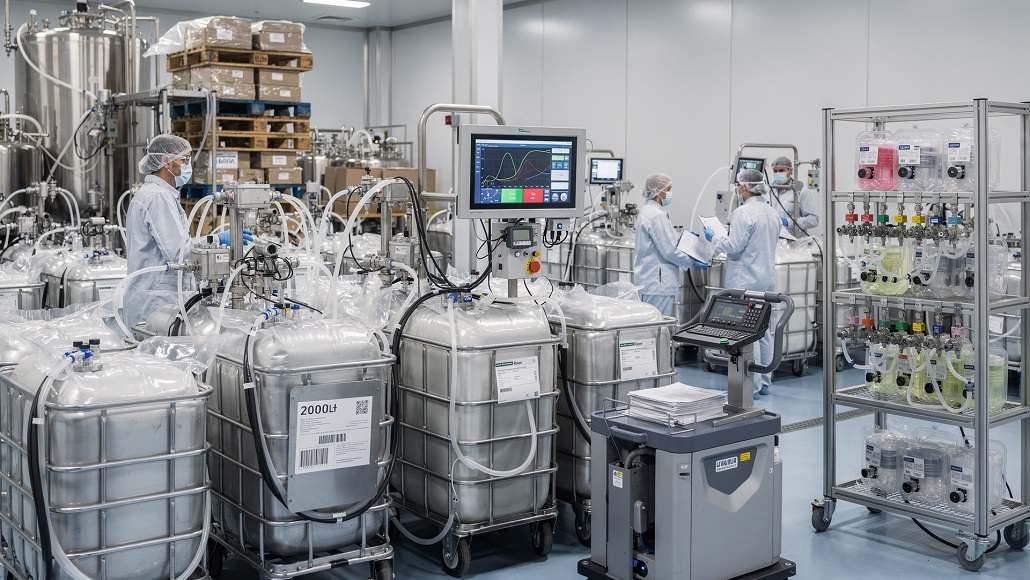
While the benefits of single-use systems are significant, scaling to very large volumes (e.g., 2,000 liters and above) presents unique technical challenges. The sheer weight of the fluid can put immense pressure on the plastic bags and their support structures. To address this, developers of single-use fluid handling systems for biologics have designed reinforced stainless steel “totes” and specialized shelving systems that provide the necessary mechanical support. Furthermore, managing the logistics of moving hundreds of kilograms of fluid through a facility requires careful planning of the cleanroom layout and the use of automated lift and transport systems. These innovations ensure that the advantages of single-use technology can be realized even in high-volume commercial manufacturing environments.
The Role of Automation in Scaled-Up Operations
Automation is becoming increasingly important as bioprocesses grow in scale and complexity. Manually managing dozens of fluid transfers in a single-use environment is not only labor-intensive but also prone to human error. Modern scaling biologics with single-use fluid handling systems involves integrating these disposable components with automated control platforms. These platforms can manage pump speeds, monitor sensor data, and coordinate the opening and closing of valves based on pre-defined recipes. This integration ensures that the process is executed with the highest level of precision and reproducibility, which is essential for meeting the stringent quality standards of GMP manufacturing.
Supply Chain Reliability for Scalable Growth
A successful scale-up strategy is only as strong as its weakest link, and for single-use technology, that link is often the supply chain. Manufacturers who rely on single-use fluid handling systems for biologics must ensure that they have a steady and reliable supply of components to avoid costly production delays. This has led to a shift toward more collaborative relationships between drug manufacturers and their equipment suppliers. Many companies are now implementing long-term supply agreements, maintaining safety stocks of critical components, and working with suppliers who have multi-site manufacturing capabilities. This focus on supply chain resilience is essential for ensuring that the promise of scalable, flexible manufacturing can be fulfilled over the long term.
Future Outlook: The Convergence of Scale and Personalization
As we look toward the future, the requirements for scalability are evolving. While there will always be a need for large-scale production of block-buster drugs, the rise of personalized medicine is creating a need for “scale-down” technologies that can produce small, patient-specific doses with the same level of quality and efficiency as large batches. Single-use fluid handling systems for biologics are uniquely suited to this challenge, as they can be easily customized for any volume. The convergence of large-scale efficiency and small-scale personalization will be the next major milestone in the evolution of biomanufacturing, and disposable fluid handling will be at the heart of this revolution.
Conclusion
The journey from a laboratory discovery to a commercial biologic is complex and fraught with risk, but the right technology can make all the difference. Scaling biologics with single-use fluid handling systems provides a robust, flexible, and cost-effective framework for navigating this journey. By embracing these systems, manufacturers can reduce their capital risk, streamline their regulatory path, and build a manufacturing infrastructure that is capable of meeting the dynamic needs of the 21st-century patient. As the industry continues to innovate, the role of single-use technology will only grow, cementing its place as the foundational technology for the next generation of biopharmaceutical excellence.
