



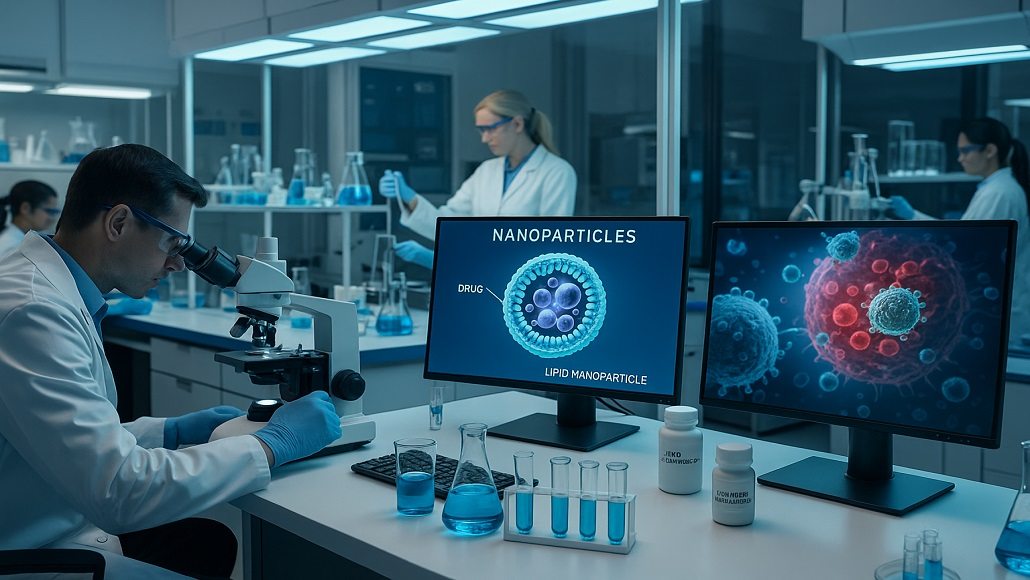








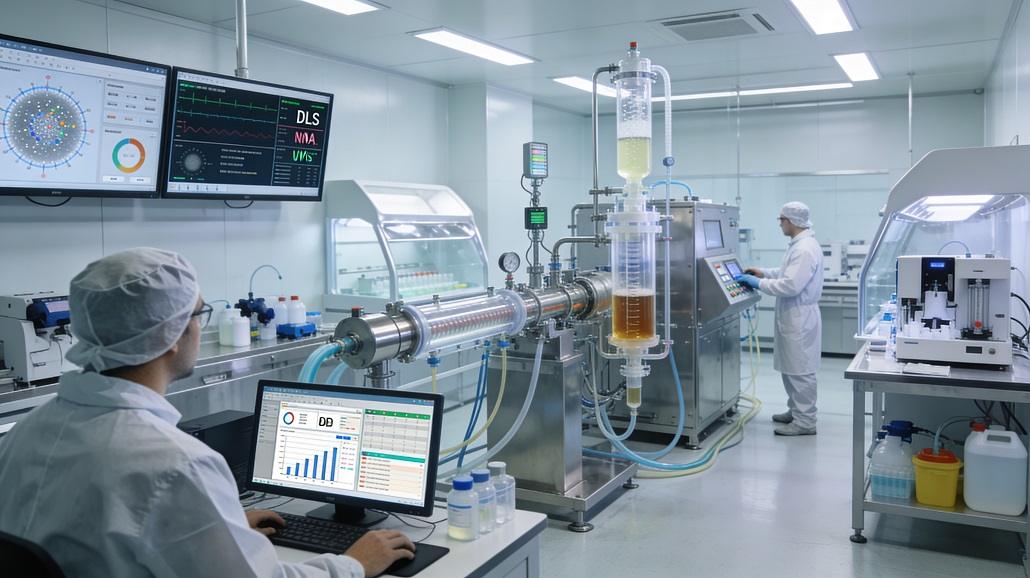
The transition of lipid nanoparticles from a niche laboratory tool to a cornerstone of modern vaccinology and gene therapy has placed an unprecedented spotlight on manufacturing efficiency. As the demand for RNA-based medicines grows, the industry faces the daunting task of producing these complex structures with absolute precision at a massive scale. Success in this arena is not merely a matter of increasing volume; it requires a fundamental shift toward optimizing lipid nanoparticle process development. This optimization involves a holistic evaluation of every variable in the production chain, from the initial mixing of lipids and nucleic acids to the final purification and fill-finish stages. By applying rigorous engineering principles to the assembly of these nanoparticles, developers can ensure that their products are both effective and commercially viable.
Central to the success of lipid nanoparticle process development is the control of self-assembly kinetics. When lipids dissolved in an organic solvent meet an aqueous solution containing mRNA, they spontaneously organize into nanostructures. The speed and turbulence of this mixing process determine the size, homogeneity, and encapsulation efficiency of the resulting particles. If the mixing is too slow or inconsistent, the particles may become too large or vary significantly in their payload capacity, leading to poor biological performance. Consequently, process engineers are increasingly turning to advanced mixing technologies that offer sub-millisecond control over fluid dynamics. These technologies allow for the creation of a highly uniform population of particles, which is a primary goal when optimizing lipid nanoparticle process development for clinical use.
Critical Parameters in Particle Size Control and Reproducibility
One of the most significant challenges in LNP manufacturing is maintaining a consistent particle size distribution across different batches. Size is a critical quality attribute because it dictates how the nanoparticle interacts with the body’s immune system and how it is distributed within target tissues. Small variations in flow rates, temperature, or concentration can lead to significant shifts in the polydispersity index, potentially compromising the safety and efficacy of the drug. Therefore, a key component of lipid nanoparticle process development is the establishment of a “Design of Experiments” framework. This approach allows researchers to systematically vary multiple parameters and identify the precise operating window that yields the desired particle profile. By understanding these sensitivities early in the development cycle, companies can avoid costly failures during the scale-up phase.
In addition to mixing conditions, the choice of solvents and buffers plays a vital role in reproducibility. Ethanol is typically used to dissolve the lipid components, but its concentration during the mixing phase must be carefully managed to prevent premature precipitation or aggregation. Similarly, the pH and ionic strength of the aqueous phase must be optimized to facilitate the electrostatic interaction between the lipids and the RNA. As part of a comprehensive lipid nanoparticle process development strategy, these chemical parameters are fine-tuned to ensure that the self-assembly process is as robust as possible. This level of control is essential for meeting the stringent requirements of regulatory agencies, which demand proof that the manufacturing process is stable and capable of producing a consistent product over time.
Navigating the Complexities of Nanoparticle Scale Up
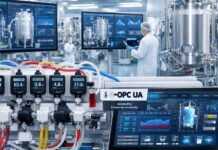
Scaling a process from a few milliliters in a research lab to hundreds of liters in a commercial facility is rarely a linear progression. In the context of LNPs, the physics of mixing changes dramatically as the equipment size increases. Traditional batch mixing methods often fail to provide the necessary uniformity at large scales, leading to “hot spots” where particle formation is sub-optimal. To overcome this, lipid nanoparticle process development now emphasizes the use of continuous manufacturing platforms. These systems, often based on microfluidic or impingement jet mixing, allow for the production of large volumes by simply extending the run time rather than increasing the size of the mixing chamber. This “scale-out” rather than “scale-up” philosophy significantly reduces the risk of process deviations and simplifies the transition to commercial manufacturing.
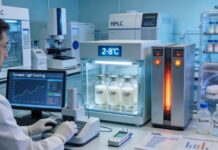
During the scale-up process, downstream processing also becomes a bottleneck. After the initial formation of the LNPs, the organic solvent must be removed, and the particles must be concentrated and stabilized through diafiltration and ultrafiltration. These steps involve significant mechanical stress that can lead to particle degradation if not managed correctly. Optimizing lipid nanoparticle process development involves selecting the right membranes and flow conditions to minimize shear stress while maximizing the rate of solvent exchange. Furthermore, the integration of real-time monitoring tools, such as inline dynamic light scattering, allows operators to detect and correct deviations instantly, ensuring that only high-quality material moves forward in the production line.
Addressing the Challenges of Tangential Flow Filtration
The purification stage, particularly Tangential Flow Filtration (TFF), is one of the most critical steps in the entire manufacturing process. TFF is used to remove the ethanol used during mixing and to replace the initial buffer with a stable formulation buffer. However, the process of pumping the nanoparticle suspension through fine membranes can subject the LNPs to shear forces that may compromise their integrity. Optimizing lipid nanoparticle process development requires a deep understanding of how pump types, flow rates, and membrane pore sizes affect particle stability. By carefully controlling the transmembrane pressure and the shear rate, manufacturers can achieve high purification efficiency without damaging the delicate nanoparticles.
Moreover, the concentration step in TFF must be managed with precision. As the concentration of LNPs increases, the risk of particle aggregation rises, which can lead to clogging of the filters and a loss of yield. Advanced lipid nanoparticle process development strategies incorporate the use of specialized stabilizers and anti-fouling agents that prevent these issues. Additionally, the development of single-use TFF systems has significantly reduced the time and cost associated with cleaning validation, making it easier for manufacturers to switch between different product lines while maintaining a high level of sterility and quality control.
Ensuring Quality Compliance and GMP Process Development
The final hurdle in lipid nanoparticle process development is aligning the production workflow with Good Manufacturing Practice standards. GMP compliance is not an afterthought but a foundational requirement that influences every decision made during the development phase. This includes the validation of analytical methods used to characterize the particles, the qualification of equipment, and the implementation of a robust quality management system. For RNA therapies, this also means ensuring that the entire process is conducted in a sterile environment to prevent contamination. By embedding quality-by-design principles into the lipid nanoparticle process development workflow, manufacturers can create a clear path to regulatory approval and clinical implementation.
Moreover, the documentation of process development is just as important as the physical manufacturing. Regulatory bodies require a detailed “process history” that demonstrates how the final manufacturing conditions were selected and why they are considered safe. This data package is the culmination of months or years of lipid nanoparticle process development and serves as the evidence that the manufacturer has a deep understanding of their product. As the industry continues to evolve, the lessons learned from early LNP successes are being used to create standardized templates for process development. These templates will accelerate the delivery of new RNA therapies, making the benefits of this technology available to patients faster than ever before.
Implementing Process Analytical Technology for Real-Time Control
To further enhance the robustness of manufacturing, the integration of Process Analytical Technology (PAT) is becoming increasingly common. PAT involves the use of sensors and analytical tools that provide real-time data on the state of the manufacturing process. For example, in-line Raman spectroscopy or UV-Vis detectors can be used to monitor the concentration of lipids and mRNA during the mixing phase, while dynamic light scattering can provide instant feedback on particle size. By incorporating these tools into the lipid nanoparticle process development strategy, manufacturers can implement automated feedback loops that adjust process parameters in real-time to maintain optimal conditions.
This shift toward “smart manufacturing” represents the future of the industry. By reducing the reliance on end-product testing and focusing on process control, manufacturers can significantly improve yield and reduce the risk of batch failures. The data generated by PAT tools also provides a wealth of information that can be used to further refine the lipid nanoparticle process development workflow. Machine learning algorithms can analyze this data to identify subtle correlations between process variables and product quality, leading to a deeper understanding of the complex interactions that occur during nanoparticle formation. This proactive approach to quality is essential for the sustainable production of advanced RNA therapeutics on a global scale.
The Impact of Process Development on Therapeutic Affordability
Finally, it is important to recognize that optimizing lipid nanoparticle process development has a direct impact on the affordability and accessibility of RNA medicines. By improving production yields and reducing the time required for scale-up, manufacturers can lower the overall cost of goods. This is particularly important for therapies targeting rare diseases or for vaccines intended for use in low-resource settings. Efficient process development also reduces the environmental footprint of manufacturing by minimizing the use of solvents and energy. As the field matures, the continued focus on process innovation will be the key to making the promise of genetic medicine a reality for everyone.
In conclusion, the journey of an RNA therapeutic from a laboratory concept to a life-saving medicine is a feat of engineering as much as it is a triumph of biology. Through the careful and systematic optimization of lipid nanoparticle process development, the industry is overcoming the technical barriers that have long hindered the delivery of genetic material. By focusing on precision mixing, robust scale-up strategies, and rigorous quality control, manufacturers are setting a new standard for the production of complex biologics. As we look to the future, the continued evolution of these manufacturing platforms will drive the next wave of medical innovation, bringing hope to patients with previously untreatable conditions and reinforcing the vital role of bioprocessing in global health.
