

















Fluid Transfer Innovation in Single-Use Biomanufacturing
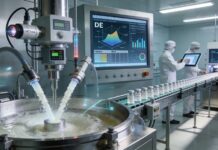
The production of high-value biologics, ranging from monoclonal antibodies to advanced cell and gene therapies, requires a delicate balance of precision, sterility, and speed. Central to this challenge is the movement of sensitive fluids between different unit operations without compromising the biological activity of the product or introducing external contaminants. Historically, this was managed through complex networks of permanent stainless steel piping, but today, fluid transfer innovation in single-use biomanufacturing has become the primary driver of operational excellence. This shift is not merely a change in materials but a fundamental reimagining of the manufacturing workflow, where every connection point and tubing run is optimized for maximum efficiency and safety.
The Evolution of Connectivity and Sterile Integrity
In the early days of disposable technology, the industry struggled with the limitations of simple plastic tubing and basic connectors that often required cumbersome heat-sealing or manual clamping. However, recent fluid transfer innovation in single-use biomanufacturing has introduced a new generation of genderless sterile connectors and disconnectors that allow for “plug-and-play” functionality. these devices enable operators to create aseptic links in non-sterile environments, significantly expanding the possibilities for flexible facility design. By utilizing these innovations, manufacturers can move away from traditional “ball-and-socket” limitations, ensuring that fluid pathways remain closed and protected from the moment a batch is initiated until the final fill-and-finish stage is complete.
Advancements in Tubing Material Science and Performance
The performance of any fluid transfer system is inherently linked to the quality of the tubing used to transport the product. Innovation in this area has led to the development of specialized thermoplastic elastomers and silicones that offer superior kink resistance, low spallation during pumping, and minimal gas permeability. Within the context of fluid transfer innovation in single-use biomanufacturing, these materials are engineered to withstand the mechanical stresses of peristaltic pumping while remaining inert to the sensitive proteins and cells passing through them. The ability to customize tubing shore hardness and chemical resistance ensures that even the most aggressive buffers or delicate growth media can be handled with absolute confidence, preventing product degradation and ensuring consistent batch-to-batch quality.
Smart Sensors and the Digitalization of Fluid Pathways
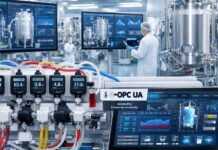
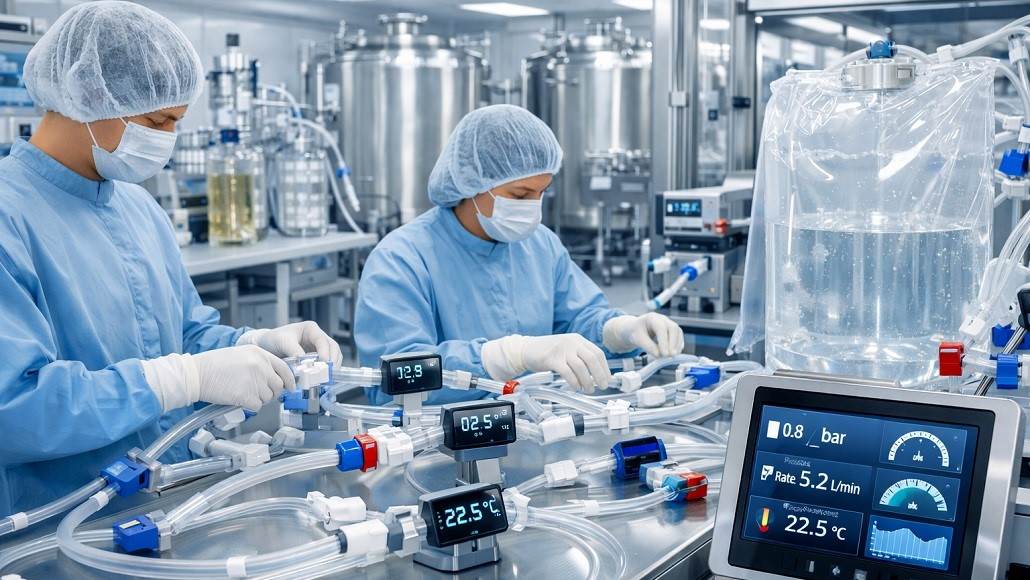
One of the most exciting frontiers in this field is the integration of single-use sensors directly into the fluid path. Traditional monitoring often required taking samples out of the system, which increased the risk of contamination. Modern fluid transfer innovation in single-use biomanufacturing now incorporates pre-calibrated, gamma-stable sensors for pressure, temperature, flow, and conductivity. These sensors provide real-time data to the control system, allowing for automated adjustments that protect the integrity of the process. For example, if a downstream filter begins to foul, the system can automatically reduce pump speed to prevent a pressure spike that could rupture a bag or damage the product. This transition toward “smart” fluid handling is a key component of the broader Industry 4.0 movement within the life sciences sector.
Enhancing Operational Efficiency and Turnaround Times
The primary economic motivator for adopting advanced fluid transfer systems is the drastic reduction in setup and turnaround times. In a conventional facility, cleaning and sterilizing a transfer line could take hours or even days, requiring massive amounts of high-purity water and steam. By leveraging fluid transfer innovation in single-use biomanufacturing, these steps are virtually eliminated. A new, pre-validated assembly can be installed in minutes, allowing a single facility to produce multiple different products in rapid succession. This capability is particularly vital for contract development and manufacturing organizations (CDMOs) that must manage a diverse pipeline of client projects with varying scale and complexity requirements.
Mitigating Human Error Through Standardized Assemblies
Human error remains one of the leading causes of batch failure in the pharmaceutical industry. The complexity of managing hundreds of manual valves and dozens of stainless steel lines creates numerous opportunities for mistakes. The modular nature of modern assemblies, a hallmark of fluid transfer innovation in single-use biomanufacturing, addresses this by providing standardized, kitted solutions where the risk of incorrect assembly is minimized. Many of these systems now feature color-coded components and physical lockouts that prevent improper connections. This standardization not only improves safety but also simplifies the training process for new operators, ensuring that high standards of quality are maintained even as production scales up and the workforce expands.
Scaling from Lab to Commercial Production
The transition from a small-scale laboratory environment to a full-scale commercial manufacturing suite has traditionally been a major bottleneck in drug development. Fluid transfer innovation in single-use biomanufacturing has eased this transition by providing scalable components that behave consistently across different volumes. Whether a scientist is working with a 50-liter pilot batch or a 2,000-liter commercial run, the fluid dynamics and material interactions remain predictable. This “seamless scale-up” capability reduces the need for extensive re-validation and allows companies to accelerate their clinical timelines, bringing important new treatments to patients more quickly than ever before.
Quality Control and Regulatory Compliance in a Disposable World
As fluid transfer systems become more sophisticated, the regulatory landscape is also evolving to ensure that patient safety is never compromised. Regulatory agencies now place a high level of scrutiny on the interaction between the plastic materials and the drug substance. Leading providers of fluid transfer innovation in single-use biomanufacturing respond to this by providing extensive data packages covering extractables, leachables, and particulate matter. This transparency allows manufacturers to conduct thorough risk assessments and prove that their processes are compliant with Good Manufacturing Practices (GMP). The focus on quality extends to the supply chain as well, where robust quality management systems ensure that every component is tracked and verified from the raw resin to the final sterilized assembly.
Addressing the Challenges of Supply Chain Resilience
While the benefits of disposable systems are clear, the industry’s reliance on a few key suppliers for these critical components has highlighted the need for greater supply chain resilience. Recent global events have shown that disruptions in plastic resin availability or sterilization capacity can have a ripple effect across the entire biopharma sector. As a result, many companies are seeking second-source options and pushing for greater standardization across the industry. This push for interoperability is itself a form of fluid transfer innovation in single-use biomanufacturing, as it encourages suppliers to create components that can be used interchangeably, reducing the risk of single-point failures in the production process and ensuring a more stable supply of medicine.
Future Outlook: The Next Wave of Fluid Handling Innovation
Looking to the future, the development of even more advanced materials and the deeper integration of artificial intelligence will continue to push the boundaries of what is possible. We may soon see “self-healing” tubing or manifolds that can automatically detect and isolate leaks before they become catastrophic. Additionally, the move toward continuous bioprocessing where product flows through the system in a steady stream rather than in discrete batches will place even greater demands on the durability and reliability of fluid transfer innovation in single-use biomanufacturing. As the industry continues to innovate, the focus will remain on creating systems that are not only more efficient but also more intelligent, providing the foundation for the next generation of biopharmaceutical breakthroughs.
Conclusion
The shift toward single-use technology has fundamentally changed the face of biomanufacturing, and at the center of this change is the constant evolution of how we move fluids. Fluid transfer innovation in single-use biomanufacturing has provided the industry with the tools it needs to be more agile, more efficient, and more focused on the ultimate goal of patient care. By embracing these advancements, manufacturers are not just improving their bottom line; they are building a more robust and responsive healthcare ecosystem that is capable of meeting the challenges of the 21st century.
