







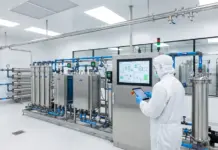


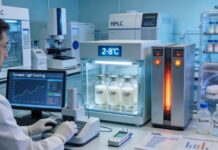


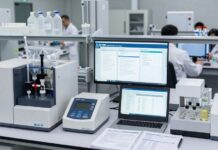







The pharmaceutical industry operates within a framework of precision where the smallest oversight can lead to significant consequences for patient safety and organizational reputation. Central to this environment is the management of laboratory water, a substance so ubiquitous that its quality often dictates the reliability of every scientific outcome. Establishing robust water quality controls pharma is not merely a box-ticking exercise for regulatory compliance it is a fundamental strategy for ensuring that drug development and quality control processes are resilient, accurate, and reproducible. As therapies become increasingly complex, the role of these controls in stabilizing the manufacturing and testing ecosystem has never been more critical.
The Strategic Importance of Real-Time Monitoring Systems
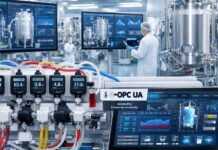
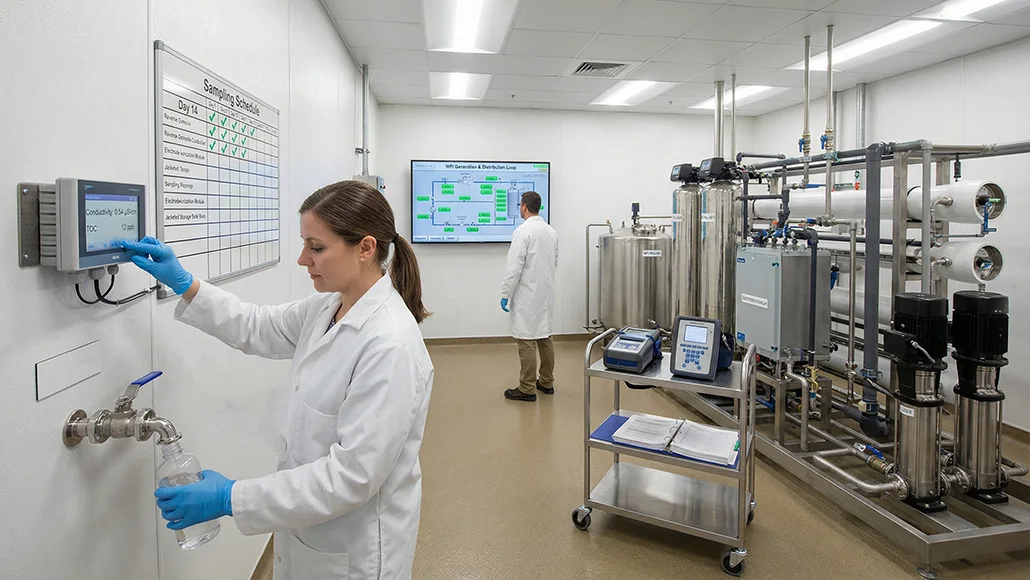
In the traditional laboratory setting, water quality was often assessed through periodic sampling and retrospective testing. However, the shift toward Quality by Design (QbD) has necessitated a move toward continuous, real-time water monitoring systems. These advanced controls provide an immediate window into the purity of the water being dispensed, measuring critical parameters such as resistivity and Total Organic Carbon (TOC). By integrating water quality controls pharma into the daily workflow, laboratories can identify potential contamination events before they affect a single assay. This proactive approach transforms the water system from a passive utility into an active guardian of analytical integrity.
Modern monitoring systems utilize highly sensitive sensors that can detect fluctuations in ionic content and organic load at the parts-per-billion level. When these systems are linked to automated alarm protocols, they ensure that any deviation from the established baseline is addressed instantly. This level of control is particularly vital for high-sensitivity applications like Liquid Chromatography-Mass Spectrometry (LC-MS), where even a minor spike in organic contaminants can lead to signal suppression or the emergence of misleading background peaks. Consistent monitoring ensures that the blank remains truly blank, providing researchers with a stable foundation for discovery.
Mitigating Biological and Chemical Risks
Pharma risk management begins at the molecular level, and water is a primary vector for potential contaminants. Biological risks, such as the growth of biofilms within distribution piping, pose a persistent threat to pharmaceutical outcomes. These complex communities of microorganisms are notoriously difficult to eradicate once established and can shed endotoxins and bacteria into the water supply. Implementing rigorous water quality controls pharma involves the use of UV sterilization, ultrafiltration, and periodic thermal or chemical sanitization. These controls are designed to break the lifecycle of contaminants, ensuring that the water remains sterile and pyrogen-free.
Chemical contamination, including trace metals and dissolved gases, can also compromise drug stability and assay performance. For instance, the presence of dissolved oxygen can catalyze the oxidation of sensitive drug candidates, while trace minerals can interfere with enzymatic reactions. By utilizing multi-stage purification processes incorporating reverse osmosis and electrodeionization and verifying the output through standardized water quality controls pharma, labs can ensure that their solvent environment is chemically inert. This meticulous removal of chemical noise allows the true properties of the drug substance to be evaluated without interference.
Enhancing Laboratory Consistency and Throughput
Consistency is the hallmark of a world-class laboratory. When water quality varies from day to day or from one lab bench to another, it introduces a hidden variable that can lead to Out of Specification (OOS) results. These failures trigger exhaustive investigations that consume valuable time and resources, often delaying the release of critical medications. Standardizing water quality controls pharma across a facility ensures that every researcher is working with an identical reagent. This stability streamlines the laboratory’s throughput, as scientists spend less time troubleshooting their environment and more time generating actionable data.
Furthermore, the consistency provided by high-end water controls facilitates the seamless transfer of analytical methods between different sites. If a method is validated using a specific grade of water, the ability to replicate those exact conditions at a manufacturing site is essential for successful technology transfer. Water quality controls pharma provide the empirical data needed to prove that the environment at the new site is equivalent to the development lab. This alignment reduces the risk of method failure during the scale-up process, ensuring that the drug’s quality profile remains unchanged as it moves toward commercial production.
Regulatory Standards as a Blueprint for Excellence
The pharmaceutical industry is governed by a strict set of pharmacopeial standards, including those from the USP, EP, and JP. These documents provide the baseline requirements for water quality, but leading organizations recognize that these are minimum thresholds rather than the ceiling for excellence. Adhering to regulatory standards pharma involves a comprehensive validation process, including Installation Qualification (IQ), Operational Qualification (OQ), and Performance Qualification (PQ). These steps provide the documented evidence that the water quality controls pharma are functioning as intended and consistently producing water of the required purity.
Beyond the initial validation, ongoing compliance requires a robust documentation strategy. Modern water systems with digital logging capabilities automatically generate audit-ready reports, detailing every hour of the system’s performance. This transparency is a key component of pharma risk management, as it allows quality assurance teams to demonstrate total control over their water supply during regulatory inspections. By treating water quality as a critical process parameter, companies can navigate the complexities of global regulation with confidence, knowing that their foundational processes are beyond reproach.
The Economic Impact of Precision Controls
While the investment in advanced water quality controls pharma and sophisticated monitoring systems can be significant, the cost of failure is infinitely higher. A single contaminated batch of medicine can represent millions of dollars in lost materials and labor, not to mention the potential for product recalls and legal liabilities. By contrast, a well-maintained water control strategy acts as a form of operational insurance. It minimizes the incidence of failed tests and contaminated products, providing a clear Return on Investment (ROI) through improved yield and reduced investigative overhead.
Operational efficiency is also enhanced through the optimization of maintenance schedules. In a system without advanced controls, filters and lamps might be replaced on a rigid calendar basis, leading to either unnecessary waste or the risk of using exhausted components. Data-driven water quality controls pharma allow for usage-based maintenance, where components are replaced exactly when they lose their effectiveness. This just-in-time approach reduces the facility’s environmental footprint and ensures that the water quality never dips below the required standard, further strengthening the overall pharma outcomes.
Driving Innovation in Drug Development
As we enter the era of personalized medicine and cell therapies, the requirements for water purity are becoming even more specialized. These advanced therapies often involve the manipulation of live cells, which are extremely sensitive to their environment. In this context, water quality controls pharma must include ultra-stringent limits on nucleases, proteases, and specific ions. The ability to provide this biologically inert water is what allows researchers to push the boundaries of what is possible in medicine.
Furthermore, the integration of digital twins and AI into water systems is the next frontier of control. These technologies can analyze historical data to predict when a system might be trending toward a deviation, allowing for proactive intervention. This level of intelligent control ensures that the lab environment is always optimized for the specific needs of the research being conducted. By embracing these technological advancements, pharmaceutical companies can ensure that their water quality controls pharma remain a powerful driver of innovation rather than a limitation.
Conclusion: Securing the Future of Pharmaceutical Integrity
The relationship between water quality and pharmaceutical success is inseparable. From the initial stages of molecular research to the final release of a life-saving drug, the quality of the water used dictates the integrity of the data and the safety of the product. Implementing comprehensive water quality controls pharma is the most effective way to ensure that this critical resource remains a source of stability rather than a source of risk. By prioritizing real-time monitoring, rigorous validation, and a culture of continuous improvement, pharmaceutical organizations can strengthen their operational outcomes and fulfill their promise to patients.
As the industry continues to evolve, those who view water quality as a strategic asset will be best positioned to lead. The investment in superior water quality controls pharma is an investment in the very foundation of science. It provides the clarity needed to make informed decisions, the consistency needed to scale global operations, and the safety needed to protect human health. In the high-stakes world of pharmaceutical development, where every drop counts, the strength of your outcomes will always be defined by the quality of your controls.
