









In the world of pharmaceutical manufacturing, the ability to isolate and purify specific compounds with absolute precision is the cornerstone of product safety and efficacy. As drug formulations become increasingly complex, particularly with the rise of biologics and specialized therapies, the industry is turning to advanced separation and filtration systems to meet more rigorous standards. These technologies are no longer just supporting roles in the production line; they are the primary drivers of process efficiency, yield optimization, and contamination control. By leveraging the latest innovations in membrane science and mechanical separation, pharmaceutical companies can ensure that every batch of medication is free from impurities and produced with the highest possible degree of operational throughput.
The Critical Role of Purity in Modern Medicine
The demand for high-purity drug products is more intense than ever before. For complex biologics, even the smallest amount of a cross-contaminant or a degraded protein can have a significant impact on the safety and effectiveness of the therapy. This has led to a major focus on advanced separation and filtration systems that can operate at the molecular level. These systems are designed to distinguish between highly similar molecules based on their size, charge, or chemical affinity. By achieving a higher degree of purification during the early stages of manufacturing, companies can reduce the burden on subsequent downstream processes, leading to a more streamlined and cost-effective production cycle.
Innovations in Membrane Separation Technology
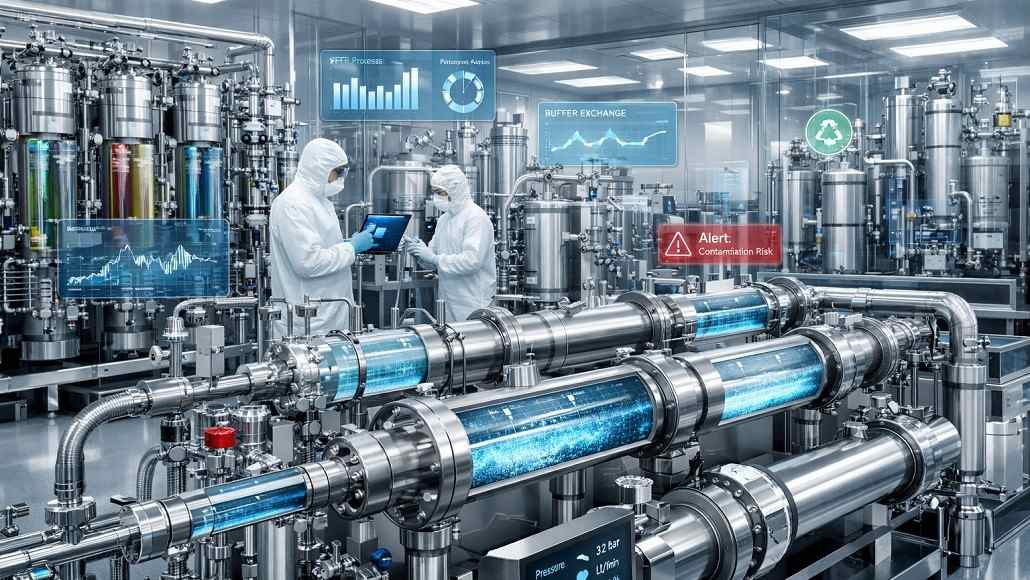
At the heart of many advanced separation and filtration systems is the development of next-generation membranes. Unlike traditional filters that simply act as sieves, modern membranes are highly engineered materials with precisely controlled pore structures. Technologies such as ultrafiltration, nanofiltration, and reverse osmosis are being used to separate proteins, viruses, and small molecules with unprecedented accuracy. These membrane separation systems are particularly valuable in bioprocessing, where they are used for cell harvesting, protein concentration, and buffer exchange. The durability and selectivity of these new materials allow for longer production runs and reduced downtime for filter changes, directly contributing to the overall efficiency of the manufacturing facility.
Enhancing Contamination Control in Sterile Environments
Contamination control is a top priority in any pharmaceutical operation, and advanced separation and filtration systems are the primary line of defense. In the production of injectable drugs, the removal of bacteria and pyrogens is a non-negotiable requirement. High-efficiency particulate air (HEPA) and ultra-low penetration air (ULPA) filtration systems are used to maintain the sterility of cleanrooms, while specialized liquid filters ensure that the product stream remains pristine. The integration of advanced sensors into these filtration systems allows for real-time monitoring of filter integrity, providing operators with immediate alerts if a breach occurs. This proactive approach to contamination control is essential for maintaining GMP compliance and for protecting the health of the end patient.
High-Efficiency Processing through Continuous Separation
While batch separation has been the industry standard for decades, there is a growing trend toward continuous processing. Advanced separation and filtration systems that are designed for continuous operation offer several significant advantages, including a smaller physical footprint and reduced energy consumption. Technologies like multi-column chromatography and continuous centrifugal separation allow for the constant flow of material, eliminating the downtime associated with batch changeovers. This continuous approach is inherently more compatible with the principles of Industry 4.0, as it facilitates the collection of real-time data and the implementation of automated control loops. As the industry moves toward more agile manufacturing models, the role of continuous separation will only become more prominent.
Solvent Recovery Systems and Environmental Sustainability
Organic solvents are essential for many pharmaceutical synthesis and extraction processes, but they are also a significant source of waste and environmental impact. Advanced separation and filtration systems are playing a critical role in the implementation of solvent recovery systems. By utilizing specialized membranes that can withstand harsh chemical environments, manufacturers can recover and purify spent solvents for reuse in subsequent batches. This closed-loop approach not only reduces the cost of raw materials but also minimizes the volume of hazardous waste that must be disposed of. Solvent recovery is a key component of the circular economy in pharma, demonstrating how advanced purification technology can drive both economic efficiency and environmental sustainability.
Purification Technology for Personalized Medicine
The rise of personalized medicine, where therapies are tailored to the individual genetic profile of a patient, is creating a new set of challenges for separation and purification. These therapies often involve very small batch sizes and require highly specific isolation techniques. Advanced separation and filtration systems that are modular and scalable are perfectly suited for this application. Technologies like magnetic bead separation and microfluidic filtration allow for the high-resolution purification of cells and molecules in a small, self-contained environment. This level of precision is essential for ensuring the safety and efficacy of next-generation therapies like CAR-T cell therapy, where the margin for error is virtually zero.
Overcoming the Challenges of Complex Separations
Despite the high level of innovation, many separation and purification tasks remain incredibly difficult. For example, separating two very similar proteins or removing a specific viral contaminant can require the use of highly specialized and expensive chromatography resins. Advanced separation and filtration systems are being developed to address these challenges through the use of “intelligent” materials that can change their properties in response to environmental stimuli. For example, pH-responsive or temperature-sensitive membranes can be used to selectively capture and release specific molecules, providing a high degree of control over the purification process. These “smart” separation technologies are at the cutting edge of pharmaceutical engineering and hold the promise of even higher levels of efficiency in the future.
The Role of Data and Analytics in Filtration Performance
As with every other aspect of modern manufacturing, data is playing an increasingly important role in the performance of advanced separation and filtration systems. By collecting data on pressure drops, flow rates, and turbidity, manufacturers can build predictive models that identify when a filter is approaching its capacity or when a separation process is beginning to drift out of specification. This data-driven approach allows for more informed decision-making and for the implementation of predictive maintenance strategies that minimize unplanned downtime. In the era of the smart factory, the integration of filtration data into the broader manufacturing execution system (MES) is essential for achieving the highest levels of operational excellence.
Future Perspectives on Separation Science
Looking toward the future, the field of separation science is poised for even greater breakthroughs. Researchers are exploring the use of nanotechnology and 3D printing to create filtration systems with even more complex and efficient geometries. The goal is to create systems that can achieve absolute purity with minimal energy input and zero waste. As these technologies continue to mature, they will redefine the boundaries of what is possible in drug production, making it possible to manufacture complex therapies faster and more reliably than ever before. The future of pharmaceutical efficiency is being built on a foundation of advanced separation and filtration, ensuring that the next generation of medicines is as pure as it is effective.
Conclusion and Final Reflections
In conclusion, advanced separation and filtration systems are a vital component of the modern pharmaceutical manufacturing landscape. By enhancing product purity, ensuring contamination control, and facilitating solvent recovery, these technologies are driving a new level of efficiency and sustainability in drug production. The shift toward continuous processing and the development of specialized purification techniques for personalized medicine are setting new standards for the industry. While the technical challenges of complex separations remain, the ongoing innovation in membrane science and data analytics is providing the tools needed to overcome them. As we look forward, the continued development of these advanced systems will be essential for delivering the next generation of life-saving therapies to patients around the world with the highest possible degree of safety and reliability.
