





















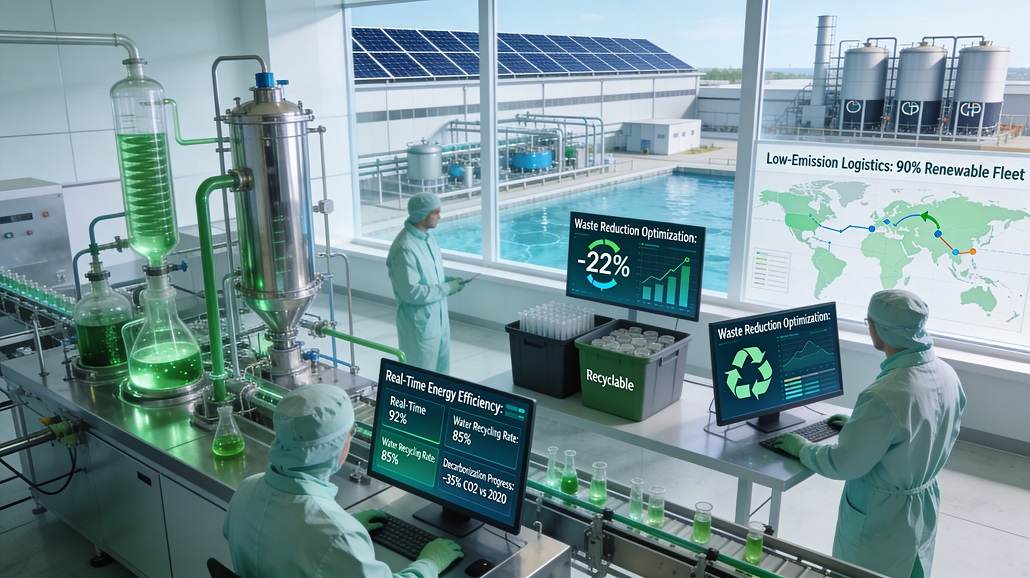
The pharmaceutical industry is currently undergoing a significant shift in its operational priorities, as environmental sustainability moves from a corporate social responsibility initiative to a core strategic imperative. For decades, the primary metrics of success in the sector were quality, safety, and speed to market. While these remain critically important, they are now joined by a fourth pillar: environmental stewardship. The implementation of sustainable pharma manufacturing strategies is a response to the growing global urgency of climate change and the increasing expectations of investors, regulators, and patients. As we look toward 2026, the most successful pharmaceutical companies will be those that have successfully decoupled their growth from their environmental impact.
The Strategic Importance of ESG Pharma
The rise of Environmental, Social, and Governance (ESG) standards has fundamentally changed the landscape of the pharmaceutical industry. Investors are increasingly utilizing ESG performance as a proxy for the long-term resilience and risk management capability of a company. In the context of drug production, ESG pharma initiatives are focused on reducing the environmental footprint of the manufacturing process. This involves setting science-based targets for carbon reduction, implementing circular economy principles, and ensuring that the entire supply chain is managed in an ethical and sustainable manner. Companies that fail to prioritize these strategies risk not only their reputation but also their access to capital and their ability to attract top talent.
Decarbonization and Energy Efficiency in Facilities
A major focus of sustainable pharma manufacturing strategies is the decarbonization of production facilities. Pharmaceutical manufacturing is inherently energy-intensive, particularly in the operation of high-performance cleanrooms that require precise control over air filtration, temperature, and humidity. Achieving energy efficiency pharma goals requires a multi-faceted approach, including the upgrade of HVAC systems with smart sensors, the implementation of variable frequency drives, and the integration of renewable energy sources such as solar and wind. Many organizations are also exploring the use of combined heat and power (CHP) systems and geothermal energy to further reduce their reliance on fossil fuels and lower their Scope 1 and Scope 2 emissions.
The Principles of Green Pharma Manufacturing
The concept of green pharma manufacturing extends beyond facility management to include the chemical and biological processes used to create drugs. This involves the application of green chemistry principles, which seek to design chemical reactions that are more efficient and less hazardous. By selecting reagents that are less toxic and by maximizing “atom economy” ensuring that as much of the starting material as possible ends up in the final product manufacturers can significantly reduce the volume of waste generated. This proactive approach not only minimizes the environmental impact but can also lead to significant cost savings by reducing the need for expensive waste treatment and disposal processes.
Advanced Solvent Recovery and Waste Management
Organic solvents are essential to many pharmaceutical manufacturing processes, but they also represent one of the industry’s largest sources of environmental impact. Sustainable pharma manufacturing strategies prioritize the recovery and reuse of these solvents whenever possible. Modern facilities utilize advanced distillation and membrane separation technologies to purify spent solvents, allowing them to be cycled back into the production process. This “closed-loop” approach is a key component of the circular economy in pharma, where waste is viewed as a resource that has not yet been utilized. For materials that cannot be reused, companies are exploring waste-to-energy programs and other innovative disposal methods that minimize the burden on landfills.
Water Conservation and Sustainable Drug Production
Water is a vital resource in the production of medications, used for everything from formulation to cleaning and cooling. In an era of increasing water scarcity, sustainable pharma manufacturing strategies include robust water conservation and management programs. This involves the implementation of water recycling systems, where wastewater from one process is treated and reused in another part of the facility. Advanced treatment technologies, such as reverse osmosis and ozone treatment, are used to ensure that any water discharged from the facility is free from active pharmaceutical ingredients (APIs), thereby protecting local ecosystems and water supplies. This commitment to water stewardship is a critical component of the industry’s social license to operate.
The Role of Single-Use Technology in Sustainability
The adoption of single-use technology (SUT) in bioprocessing presents a complex challenge for sustainability. On one hand, SUT significantly reduces the energy and water consumption associated with clean-in-place (CIP) and steam-in-place (SIP) operations. On the other hand, it generates a significant amount of plastic waste. Sustainable pharma manufacturing strategies in 2026 involve a holistic approach to this issue, working with suppliers to develop more recyclable materials for single-use systems and implementing comprehensive recycling programs for spent components. The goal is to maximize the operational benefits of SUT while minimizing the long-term environmental impact of the plastic waste generated.
Decarbonizing the Global Pharma Supply Chain
Sustainability does not end at the factory gate; it must extend through the entire global supply chain. Pharmaceutical companies are increasingly focusing on the environmental impact of their logistics operations, which can account for a significant portion of their total carbon footprint. This includes optimizing shipping routes, moving from air to sea freight where possible, and implementing sustainable packaging solutions. For example, replacing traditional temperature-controlled packaging with reusable and biodegradable alternatives can significantly reduce the amount of waste generated during transport. Furthermore, companies are collaborating with their raw material suppliers to ensure that their production processes also meet rigorous sustainability standards.
Digitalization as an Enabler of Sustainability
The tools of digital transformation are essential for the implementation of effective sustainable pharma manufacturing strategies. By providing real-time visibility into energy and water consumption, digital platforms allow manufacturers to identify inefficiencies and track their progress toward sustainability goals. AI-driven analytics can optimize production schedules to minimize energy usage during peak hours and predict when equipment maintenance is needed to maintain peak efficiency. Digitalization is the “nervous system” of the sustainable enterprise, providing the data needed to make informed decisions that balance environmental impact with operational performance.
Overcoming Challenges to Sustainable Implementation
While the transition to sustainable manufacturing is necessary, it is not without its challenges. The high capital cost of upgrading facilities and the complex regulatory requirements for validating new processes can be significant barriers. Furthermore, there is a need for a fundamental cultural shift within the industry, moving away from a purely cost-centric approach toward one that values long-term ecological health. Overcoming these hurdles requires strong leadership and a commitment to innovation. Companies must integrate sustainability into their core business culture, ensuring that it is considered at every stage of the product lifecycle, from initial research and development to final patient delivery.
Conclusion and Future Perspective
The implementation of sustainable pharma manufacturing strategies is a defining challenge for the pharmaceutical industry in 2026. By embracing green chemistry, energy efficiency, and circular economy principles, companies are demonstrating that it is possible to produce life-saving medications while also protecting the environment. This commitment to sustainability is not only an ethical choice but a strategic one, essential for ensuring the long-term viability and success of the industry. As we look toward the future, the integration of environmental stewardship into every facet of pharmaceutical operations will be the hallmark of the most innovative and respected organizations in the sector, ensuring a healthier future for both people and the planet.
