



















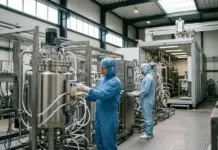




The pharmaceutical sector is currently witnessing a paradigm shift in how it manages the flow of products from manufacturing plants to patients. At the center of this revolution is the deployment of sophisticated artificial intelligence systems designed to master the complexities of global demand. Traditionally, the industry relied on linear forecasting models that often struggled to account for the myriad of external factors that influence drug consumption. Today, the implementation of AI forecasting pharma supply chain capabilities is providing a more nuanced and dynamic approach, allowing companies to transition from reactive distribution to a state of predictive readiness. This technological evolution is not just improving efficiency; it is fundamentally altering the strategic landscape of the modern pharmaceutical enterprise, ensuring that the supply chain is as responsive as the therapies are advanced.
Breaking the Limitations of Traditional Demand Forecasting
For decades, demand forecasting in the pharmaceutical world was an exercise in looking backward. Planners would analyze the previous year’s sales, apply a growth percentage, and adjust for seasonal peaks. While this was adequate for stable, high-volume products, it was notoriously inaccurate for specialized therapies or during times of rapid market change. AI-driven systems, by contrast, are capable of “multivariate” analysis. They can simultaneously evaluate hundreds of different data streams such as disease prevalence data, regional weather patterns, social media activity, and even economic indicators. This breadth of vision allows the AI to detect subtle shifts in demand long before they appear in traditional sales reports, providing a level of foresight that is essential for modern pharma inventory management.
The shift toward AI also addresses the challenge of “long-tail” products those that are high-value but low-volume. These drugs are notoriously difficult to forecast because their demand is often sporadic and highly sensitive to individual patient needs. Artificial intelligence can analyze the specific patient demographics and treatment pathways associated with these therapies, providing a much more accurate prediction of when and where they will be needed. By reducing the uncertainty surrounding these specialized products, companies can maintain lower inventory levels without increasing the risk of stockouts. This is particularly important for therapies that have short shelf lives or require specialized handling, where any forecasting error can lead to a significant financial loss and a potential disruption in patient care.
The Role of Machine Learning Logistics in Network Optimization
While forecasting identifies what is needed, machine learning logistics determines the best way to deliver it. Machine learning algorithms are uniquely suited to the high-stakes world of pharmaceutical distribution, where every minute counts and conditions must be perfect. These systems can analyze years of transit data to identify the most reliable shipping lanes, taking into account everything from historical customs delays to the performance of specific cooling units. In real-time, the AI can monitor current conditions and suggest adjustments such as rerouting a shipment of vaccines around a developing tropical storm or shifting inventory to a different warehouse to meet an unexpected surge in hospital orders. This level of automated agility ensures that the supply chain remains fluid even under intense pressure.
Furthermore, machine learning can optimize the “warehouse of the future.” By analyzing order patterns, AI can suggest the most efficient storage configurations, placing high-demand items closer to the picking stations. It can also predict when equipment is likely to fail, allowing for “predictive maintenance” that prevents costly downtime. In the context of global pharma operations, machine learning is the “brain” that coordinates a massive and diverse array of physical assets, ensuring they all work in harmony. As the network becomes more complex, the ability of these algorithms to process information and make decisions in milliseconds becomes an indispensable asset, allowing human managers to focus on high-level strategy and exception management rather than getting bogged down in the minutiae of daily operations.
Enhancing Predictive Analytics for Product Launches
The most volatile period in a drug’s lifecycle is its initial launch. Overestimating demand leads to millions of dollars in wasted inventory and potential expiration, while underestimating it can result in a loss of market share and patient frustration. AI enabled forecasting is particularly valuable here, as it can model launch trajectories based on “analogous” products, clinical trial sentiment, and payer coverage data. By simulating various market entry scenarios, companies can more accurately set their initial production targets and build a more responsive supply chain that can quickly scale up or down as the launch progresses. This precision reduces the risk associated with new therapies and ensures a smoother transition for patients transitioning to new treatments.
Predictive analytics also plays a role in identifying potential “adverse events” in the supply chain during a launch. For example, the AI might identify that a specific regional distributor is struggling to keep up with the initial surge in orders, allowing the manufacturer to step in and provide additional support before the problem escalates. It can also track the effectiveness of different marketing channels in real-time and correlate them with supply chain signals, providing a holistic view of the launch’s progress. This integration of commercial and logistical data is the ultimate expression of a data-driven enterprise, where every decision is informed by a comprehensive understanding of the entire value chain. In the high-stakes world of drug launches, this level of insight is the difference between a successful market entry and a costly failure.
Optimizing Pharma Inventory Through Intelligent Replenishment
Inventory management is often where the benefits of AI are most clearly realized. Excess stock is not just a financial liability; in the pharmaceutical world, it represents a potential safety risk if products expire or are stored improperly. AI systems can implement “dynamic replenishment” strategies that adjust order quantities and timings in real-time. Instead of a fixed monthly delivery, a pharmacy or hospital might receive shipments based on actual usage patterns detected by the AI. This “demand-pull” model ensures that inventory levels are always lean but sufficient, freeing up working capital and reducing the physical space needed for storage. Furthermore, the AI can identify “slow-moving” or at-risk inventory, allowing managers to redistribute it to areas where it is more urgently needed before it becomes waste.
This intelligent replenishment also extends to the management of “safety stock.” Traditionally, safety stock was a static buffer used to protect against uncertainty. AI transforms this into a dynamic asset. By continuously assessing the level of risk in the supply chain considering factors like supplier reliability and lead-time variability the AI can adjust safety stock levels on the fly. During periods of high stability, the buffer can be reduced, while during times of heightened risk, it can be automatically increased. This responsiveness ensures that the organization is always protected against the most likely disruptions without carrying the unnecessary burden of excess inventory. The result is a more efficient, more resilient, and more cost-effective operation that is better equipped to handle the challenges of a volatile global market.
The Human Element in an AI-Driven Supply Chain
Despite the power of artificial intelligence, the human element remains a critical component of the equation. The most successful organizations are those that view AI forecasting pharma supply chain tools as an augmentation of human expertise rather than a replacement for it. Supply chain professionals are moving into roles that focus on strategy, exception management, and relationship building. The AI handles the “heavy lifting” of data processing and pattern recognition, while humans provide the contextual understanding of regulatory shifts, ethical considerations, and long-term business goals. This synergy between human intuition and machine intelligence is creating a more sophisticated and effective workforce, capable of navigating the complexities of global health with greater confidence.
As we look toward the future, the integration of AI will only deepen. We are moving toward “autonomous” supply chains where routine decisions are handled entirely by intelligent systems, allowing the industry to respond to health crises with unprecedented speed. However, the path forward requires a commitment to data integrity and the ethical use of information. By building transparent and accountable AI systems, the pharmaceutical industry can ensure that its technological advancements continue to serve its primary mission: the safe and timely delivery of life-saving medicine. The age of AI in pharma is just beginning, and its impact on supply chain resilience will be felt for generations to come, fostering a future where no patient is ever out of reach of the treatment they need.
