

















Key Takeaways
- Smart factory integration in pharmaceutical plants increases productivity by connecting equipment, sensors, and control systems
- Real-time monitoring capabilities enable immediate detection of process deviations and potential compliance issues
- Predictive maintenance powered by IoT data reduces unplanned downtime and extends equipment lifespan
- Centralized control systems provide complete operational visibility while maintaining cGMP and FDA compliance
- Connected manufacturing enhances quality consistency and reduces batch variability across production runs
- Automated data collection eliminates manual entry errors and improves regulatory documentation
- IoT sensor networks enable faster root cause analysis and corrective action implementation
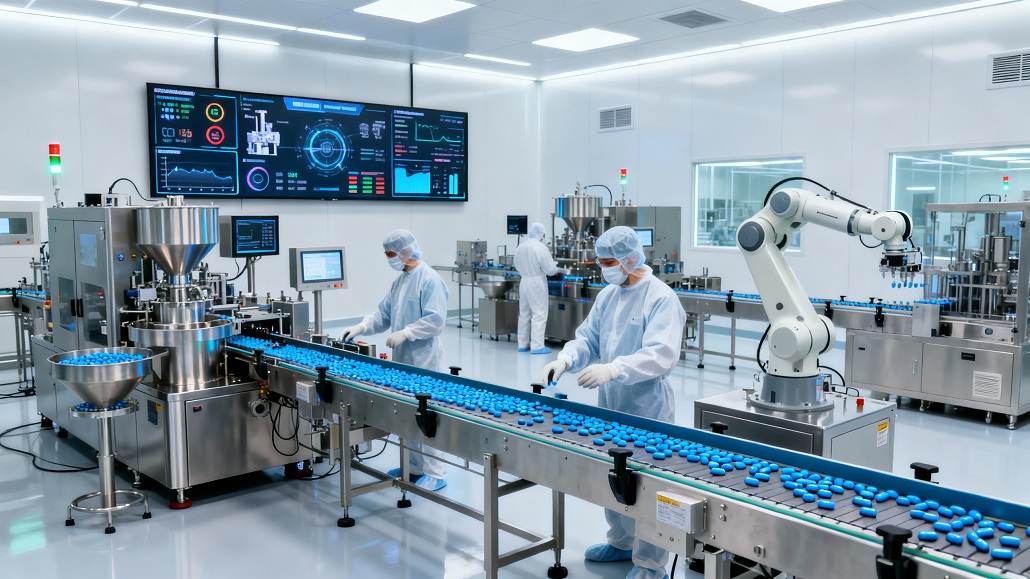
The pharmaceutical manufacturing landscape is experiencing a fundamental transformation. Smart factory architectures represent a pivotal shift from traditional isolated equipment toward interconnected, intelligent production ecosystems. These systems integrate automation, IoT sensors, and centralized control platforms to create what industry experts call the foundation of Industry 4.0 within pharmaceutical environments.
Understanding Smart Factory Pharma Architecture
The concept of smart factory pharma automation extends beyond simple equipment upgrades. It represents a comprehensive ecosystem where manufacturing equipment, environmental sensors, and control systems communicate seamlessly through a unified network. This interconnected approach creates unprecedented operational transparency while maintaining the stringent regulatory requirements that define pharmaceutical production.
Traditional pharmaceutical facilities operate with equipment islands individual machines running predefined cycles with minimal data exchange. In contrast, smart factory environments embed sensors throughout production lines, environmental chambers, and material handling systems. These sensors continuously transmit critical parameters including temperature, pressure, humidity, vibration signatures, and chemical composition data to centralized monitoring systems. The result is a complete digital representation of the manufacturing process, accessible to authorized personnel across multiple locations.
The architecture of these systems typically includes three core layers. The sensing layer comprises IoT-enabled devices mounted on manufacturing equipment and distributed throughout the facility. These sensors capture both machine-specific metrics like motor speed and vibration patterns, as well as environmental parameters including particulate counts and air flow rates. The connectivity layer facilitates seamless data transmission through industrial-grade networks, ensuring real-time communication even in challenging cleanroom environments. The analytics and control layer processes this information, generating actionable insights while enabling automated responses to process deviations.
Real-Time Operational Visibility
One of the most significant advantages of implementing smart factory pharmaceutical manufacturing systems is the unprecedented level of operational visibility they provide. Facility managers gain immediate awareness of production status across entire manufacturing lines, often accessible through intuitive dashboards that can be monitored remotely. This visibility extends beyond simple status indicators it encompasses detailed process signatures that reveal how equipment is actually performing throughout each production cycle.
Consider a typical tablet compression line in a traditional facility. Operators physically observe the line, manually record occasional measurements, and rely on end-product testing to verify quality. A smart factory implementation adds continuous monitoring of compression force, tablet weight variation, and equipment temperature. If compression force begins drifting from specification, the system immediately alerts technicians before out-of-specification tablets are produced. This shift from reactive to proactive quality management fundamentally improves product consistency.
Environmental monitoring represents another critical visibility component. Pharmaceutical facilities operate within tightly controlled environmental specifications particularly for sterile manufacturing areas where air classification, temperature stability, and humidity control directly impact product safety. Smart factory sensors create continuous environmental records that demonstrate compliance with ISO classifications and cGMP requirements. Rather than relying on periodic manual measurements, these systems provide permanent digital evidence of environmental control, substantially simplifying regulatory inspections and establishing irrefutable compliance documentation.
Predictive Maintenance and Downtime Reduction
Manufacturing downtime represents one of the largest hidden costs in pharmaceutical production. A single production line shutdown can mean delayed batches, missed market windows, and substantial revenue impact. Smart factory architectures address this challenge through IoT pharmaceutical sensors that monitor equipment health continuously, enabling true predictive maintenance rather than traditional time-based or breakdown-reactive approaches.
Equipment typically signals impending failure long before complete breakdown. A pump’s discharge pressure might gradually increase, bearing vibrations might show subtle changes in frequency signatures, or motor current patterns might shift incrementally. IoT sensors detect these subtle signals with far greater sensitivity than human operators can achieve. Machine learning algorithms analyze these patterns against historical baselines, calculating the probability of failure and estimating remaining useful life.
This capability transforms maintenance strategy from calendar-based scheduling to condition-based optimization. Instead of replacing components at predetermined intervals potentially replacing functioning parts while missing actual wear manufacturers can schedule maintenance precisely when needed. A bearing showing normal vibration signatures continues operating while another bearing showing accelerating wear receives attention before failure. The practical result is reduced maintenance costs, improved equipment uptime, and elimination of emergency repairs that compromise manufacturing schedules.
Pharmaceutical companies implementing these systems consistently report downtime reductions of fifteen to thirty percent. Beyond the immediate operational benefit, improved reliability supports just-in-time manufacturing practices and reduces the inventory buffer required to compensate for equipment failures. For global operations managing multiple manufacturing sites, this improvement in reliability becomes a significant competitive advantage.
Connected Equipment and Process Optimization
Smart manufacturing compliance requirements in pharmaceutical facilities create unique challenges for equipment integration. Every connected device must maintain data security, prevent unauthorized access, and preserve detailed audit trails of all process modifications. These security requirements cannot compromise the real-time responsiveness that smart manufacturing demands.
Modern pharmaceutical-grade connectivity solutions address these challenges through industrial protocols specifically designed for manufacturing environments. These systems implement defense-in-depth security architectures, including network segmentation that isolates critical manufacturing systems from general IT infrastructure, encryption that protects data in transit, and authentication systems that verify the identity of every device and operator. The result is secure connectivity that satisfies FDA expectations for System Suitability testing and validation requirements.
Connected equipment enables optimization opportunities impossible with standalone machines. A pharmaceutical facility producing multiple drug formulations might operate distinct batches requiring different processing parameters. In traditional setups, operators manually adjust each unit operation mixing times, filtration pressures, crystallization temperatures for each batch. In smart factory environments, the central system automatically configures all equipment based on batch-specific parameters stored in the manufacturing execution system. This automated handoff eliminates configuration errors, ensures consistent parameter application across all equipment, and creates detailed digital records of every configuration change.
The integration extends to material flow optimization. Automated systems track raw material locations, verify that materials with proper certifications are dispensed for each batch, and optimize material staging to minimize handling time. This attention to material logistics reduces waste, improves traceability, and strengthens compliance with material handling protocols.
Quality Control Automation and Consistency
Quality assurance in pharmaceutical manufacturing has traditionally relied on offline laboratory testing performed after production completion. Products must wait for analytical results, creating delay risks while batches await final disposition. Smart factory implementations enable pharmaceutical manufacturing visibility that shifts quality control from retrospective to real-time and predictive.
Process Analytical Technology (PAT) implemented within smart factory systems continuously monitors critical quality attributes throughout production. Spectroscopic sensors can verify raw material identity and measure component concentrations in real-time. Particle size distribution analyzers provide granule characterization immediately after milling. These capabilities allow operators to confirm product quality during manufacture rather than discovering issues after completion.
The consistency benefits prove substantial. Traditional batch-to-batch variation reflects equipment drift, environmental fluctuations, and undetected process deviations. Comprehensive real-time monitoring and automated corrections maintain tighter process windows. This improved consistency translates directly to product performance compressed tablets demonstrating more uniform dissolution profiles, capsules filled with more consistent weights, and parenteral products with improved particle counts.
Regulatory agencies increasingly recognize these benefits. The FDA’s guidance on Process Analytical Technology explicitly encourages real-time quality verification. Facilities implementing smart factory PAT systems often achieve more favorable inspection outcomes because they demonstrate comprehensive process understanding and direct evidence of quality maintenance throughout production.
Regulatory Compliance and Documentation
Pharmaceutical manufacturing operates under extraordinarily stringent regulatory requirements. Facilities must maintain detailed batch records demonstrating that every batch was manufactured according to approved procedures and specifications. The documentation requirements for a single batch might span hundreds of pages, including material receiving records, in-process test results, equipment maintenance documentation, and operator actions.
Smart factory systems dramatically simplify regulatory compliance while simultaneously strengthening it. Automated data collection eliminates manual transcription of measurements a common source of errors that trigger warning letters from regulatory agencies. Every process parameter change is automatically recorded with timestamp and user identification. Equipment maintenance activities automatically log with completion confirmation. The resulting digital batch record is more complete and more accurate than manually compiled records.
This documentation benefit extends to regulatory inspections. When FDA inspectors review manufacturing records, they find comprehensive data demonstrating consistent compliance. Rather than isolated measurements and operator notes, they observe complete process signatures showing that facilities maintained control throughout production. This level of documentation detail often converts potential warning letter findings into observations or commendations.
The compliance benefits extend to periodic regulatory submissions. Facilities with smart factory systems can quickly generate stability data, process capability studies, and other analyses required for regulatory approvals. The data underlying these submissions comes from actual manufacturing records rather than extracted samples or retrospective analyses, substantially strengthening regulatory submissions.
Implementation Considerations and Pathways
Implementing smart factory architectures in pharmaceutical facilities represents a significant undertaking requiring careful planning and validation. The complexity comes not from the technology itself but from integrating new systems with existing manufacturing lines while maintaining continuous production and regulatory compliance.
Most facilities pursue phased implementations rather than facility-wide transformations. A single production line might serve as a pilot project, allowing teams to develop integration expertise and validate that smart factory systems actually deliver anticipated benefits before broader deployment. These pilot projects typically require twelve to eighteen months from initial planning through full operational deployment, including equipment selection, network implementation, software configuration, and comprehensive validation testing.
The validation requirements deserve particular emphasis. Pharmaceutical manufacturers cannot simply install systems and hope they work correctly. They must demonstrate through comprehensive testing that all systems function as intended, that data accuracy meets required specifications, and that systems maintain regulatory compliance. This validation burden typically accounts for forty to fifty percent of implementation timelines but represents essential investment in manufacturing integrity.
Success requires organizational changes alongside technological implementation. Operators must learn to interpret real-time data dashboards rather than relying solely on instinct developed through years of equipment familiarity. Maintenance teams must understand machine learning algorithms predicting equipment failures rather than following traditional maintenance schedules. Quality assurance professionals must adapt to continuous monitoring supplementing laboratory testing. These organizational adaptations often present greater implementation challenges than technology integration.
Competitive and Strategic Advantages
Pharmaceutical companies with advanced smart factory pharmaceutical manufacturing capabilities gain substantial competitive advantages. Manufacturers operating smart facilities can respond more quickly to market demand because automated systems and predictive maintenance minimize unexpected downtime. They can manage more complex product portfolios because centralized control systems handle parameter management more efficiently than manual operations. They can achieve superior quality consistency because real-time monitoring catches process deviations immediately rather than at end-product testing.
These operational advantages translate to business benefits. Reduced downtime improves asset utilization and lowers per-unit manufacturing costs. Superior quality consistency reduces batch failures and rework expenses. Improved flexibility supports rapid introduction of new products or formulations. For contract manufacturers competing on responsiveness and reliability, these advantages become essential competitive factors.
Looking forward, pharmaceutical manufacturing continues advancing toward even greater automation and intelligence. Machine learning systems will develop increasingly sophisticated predictive capabilities. Artificial intelligence will optimize complex multi-step processes more efficiently than manual parameter tuning. Advanced sensors will provide molecular-level process visibility impossible with current technology. The facilities that successfully implement foundational smart factory capabilities today position themselves to readily adopt these emerging technologies tomorrow.
Conclusion
Smart factory architectures represent far more than marginal equipment upgrades or incremental efficiency improvements. They represent a fundamental transformation in how pharmaceutical facilities approach manufacturing management, quality assurance, and regulatory compliance. By integrating automation, IoT sensors, and centralized control systems, these facilities create unprecedented operational visibility while simultaneously improving product quality, reducing costs, and strengthening regulatory compliance.
The competitive landscape increasingly favors facilities with these capabilities. As more manufacturers adopt smart factory approaches, those without these systems face growing disadvantages in responsiveness, flexibility, and cost competitiveness. For pharmaceutical manufacturers committed to long-term competitiveness and operational excellence, smart factory investment has evolved from optional advancement to essential capability.
