

















Key takeaways:
- The UK secured exclusive zero percent tariff access for pharmaceuticals entering the US, removing a major source of trade uncertainty.
- The revised NICE threshold reshapes the UK’s health-technology assessment model and widens the path for higher-value medicines to reach the NHS.
- The bilateral deal signals US expectations for greater UK spending on innovative treatments, aligning commercial incentives with expanded patient access.
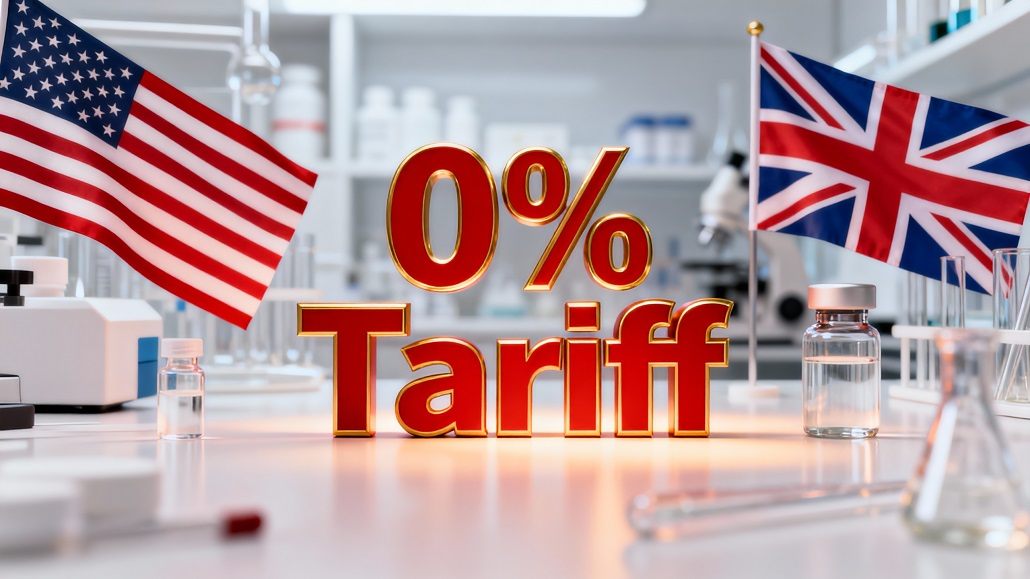
The United States and the United Kingdom have announced a historic agreement that eliminates tariffs on all UK pharmaceutical exports to the American market for a minimum of three years, marking a significant shift in transatlantic pharmaceutical trade dynamics. The US and UK zero tariff deal represents the culmination of months of intensive negotiations and comes as the Trump administration continues to reshape global pharmaceutical pricing frameworks.
Under the agreement, UK-origin pharmaceuticals, pharmaceutical ingredients, and medical technology products will be completely exempt from Section 232 tariffs and will not be targeted under any future Section 301 investigations for the duration of President Trump’s term. In exchange, the United Kingdom has committed to substantial reforms to its pharmaceutical pricing framework that will increase patient access to innovative treatments.
The UK’s Commitments
The centerpiece of the UK’s commitments involves a significant restructuring of how the National Health Service evaluates and pays for new medicines. The net price for new pharmaceutical treatments will increase by approximately 25 percent, marking the first major increase in NHS spending on innovative medicines in over two decades. Additionally, the rebate rate under the Voluntary Scheme for Branded Medicines Pricing, Access and Growth will be reduced to 15 percent by 2026 and maintained at that level throughout the agreement’s duration.
These reforms are designed to accelerate patient access to breakthrough therapies that may have previously been deemed too costly for NHS approval. Healthcare professionals and patient advocacy groups have welcomed the provision, which promises to bring cutting-edge treatments to the NHS patient base more rapidly.
Strategic Significance for the Industry
The agreement arrives at a critical juncture for the UK life sciences sector. Major pharmaceutical companies, including MSD and AstraZeneca, had postponed or canceled significant investment plans in the UK, citing an inhospitable business environment. This deal explicitly aims to reverse that trend by providing tariff certainty and improving the conditions for pharmaceutical manufacturing and research operations within the UK.
The UK becomes the only country globally to secure zero percent tariffs on pharmaceutical exports to the United States, positioning it with a distinct competitive advantage against other pharmaceutical manufacturing hubs competing for investment.
US Administration Perspective
From the American perspective, Health and Human Services Secretary Robert F. Kennedy Jr. framed the agreement as bringing long-overdue balance to US-UK pharmaceutical trade, asserting that Americans should not bear disproportionate drug costs. The administration views the US and UK zero tariff deal as part of a broader effort to ensure that developed nations contribute fairly to the costs of pharmaceutical innovation.
